“How much does it cost to replace an AC unit?” is the single most-searched HVAC cost question of the year, and it peaks in June for the reason Raleigh homeowners feel in their bones. The system that limped through last August finally quits under the first 95°F afternoon, and now you’re pricing a replacement you weren’t planning for.
The trouble is that the answer you find online swings from $3,500 to $28,000, which helps nobody. This guide narrows it to what a Raleigh home actually pays in 2026, what moves your quote up or down, how the new R-454B refrigerant changed pricing, and which incentives still apply now that the federal tax credit is gone.
TL;DR: In 2026, replacing just the air conditioner (the outdoor condenser and indoor coil) in Raleigh runs about $4,000 to $8,000 installed, while a full AC-and-furnace system runs roughly $8,000 to $17,000 depending on home size (This Old House). A typical 3-ton system for an 1,800 square foot home averages about $8,344 as a full system, or roughly $5,750 for the AC alone. Two things reshaped the math: new R-454B equipment costs an estimated 15 to 30 percent more than the R-410A units it replaced, and the federal 25C tax credit expired December 31, 2025. The savings lever now is state and utility rebates, led by Energy Saver NC at up to $8,000 toward a heat pump for income-qualified households.
How Much Does AC Replacement Cost in Raleigh in 2026?
In 2026, replacing just the air conditioner in Raleigh costs roughly $4,000 to $8,000 installed, while a full AC-and-furnace replacement runs about $8,000 to $17,000 depending on home size, according to This Old House. The three biggest cost drivers are system size, efficiency rating, and the condition of your existing ductwork.
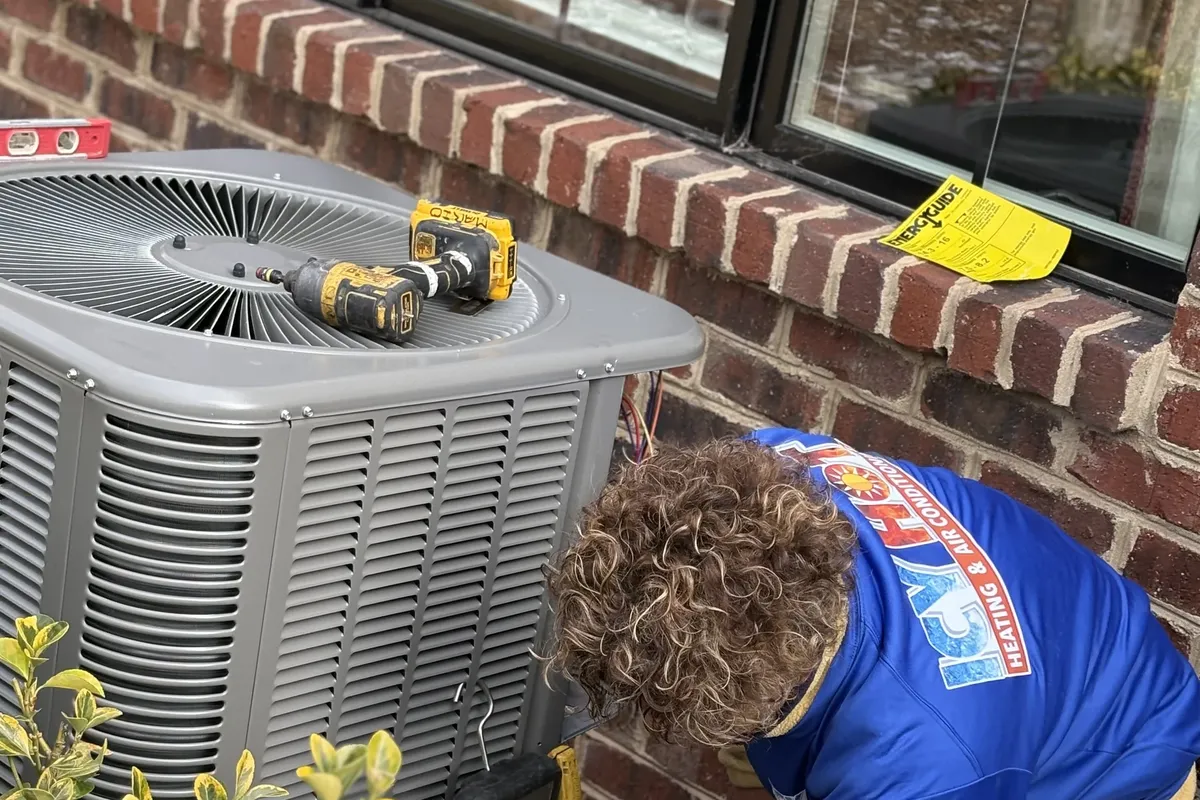
The first thing to sort out is what you’re actually replacing. An AC-only job swaps the outdoor condenser and the indoor evaporator coil. A full system replacement adds the furnace or air handler, which is why it costs more. By This Old House’s figures, a full AC-and-furnace system runs about $8,344 for an 1,800 square foot home and roughly $12,670 for a 2,500 square foot home, climbing past $17,000 for the largest homes. Knowing which job you’re pricing keeps you from comparing a neighbor’s AC-only quote to your full-system estimate.
One more reason Raleigh sits in the middle of the national range: North Carolina’s minimum efficiency standard. New systems here must meet 14.3 SEER2, the federal minimum for the Southeast region, which is higher than the 13.4 SEER2 floor in northern states. That raises the entry-level price slightly compared to a colder market, but it also means even a budget install delivers solid efficiency over our long cooling season.
What Does AC Replacement Cost by System Size?
AC replacement cost scales with tonnage, the measure of cooling capacity. In 2026, industry estimates put an AC-only replacement at roughly $2,800 to $7,300 for a 2-ton system, $3,300 to $7,800 for a 3-ton, $3,800 to $8,300 for a 4-ton, and $4,300 to $8,800 for a 5-ton, installed. Most Raleigh single-family homes use a 2.5 to 3.5-ton system.
| System Size | Typical Home Size | AC-Only Installed Range | Average |
|---|---|---|---|
| 2 ton | ~1,000 to 1,400 sq ft | $2,800 to $7,300 | $5,250 |
| 3 ton | ~1,400 to 2,000 sq ft (most common) | $3,300 to $7,800 | $5,750 |
| 4 ton | ~2,000 to 2,800 sq ft | $3,800 to $8,300 | $6,250 |
| 5 ton | ~2,800 to 3,500 sq ft | $4,300 to $8,800 | $6,750 |
AC-only (condenser and coil), installed. Industry estimates, HVAC.com, 2025. Full AC-and-furnace systems run higher.
Those square-footage figures are a starting point, not a sizing method. The right tonnage depends on a Manual J load calculation that accounts for insulation, window area, ceiling height, ductwork, and how much sun your home takes. We run that calculation on every new AC installation because guessing from square footage alone is how homes end up oversized.
And oversized is a real problem, not a safety margin. A unit that’s too large cools the air fast, shuts off, and never runs long enough to pull humidity out. You get a clammy 74°F house, more wear from short-cycling, and a shorter lifespan. So when a quote for a “bigger, more powerful” unit comes in cheaper than expected, ask why. Bigger is not better here. Right-sized is.
Keep in mind these ranges assume a straightforward swap. They cover the equipment, professional installation, a new thermostat, and basic permitting. They don’t include surprises like replacing rotted ductwork, rerouting refrigerant lines, or upgrading an undersized electrical panel, which we’ll get to next. When you compare two quotes, make sure they’re scoped the same way. A low bid that leaves out ductwork or a permit isn’t really cheaper. It just moves the cost to a change order later, after the old unit is already gone.
Should You Replace the Furnace at the Same Time?
Replacing the AC and furnace together costs more upfront, roughly $8,000 to $17,000 versus $4,000 to $8,000 for AC alone (This Old House), but it’s often the better value when both units are aging. By This Old House’s figures, a paired AC and gas furnace runs about $8,344 for an 1,800 square foot home and roughly $12,670 for a 2,500 square foot home.
Why pay more on purpose? Two reasons. First, matching a brand-new high-efficiency condenser to a 16-year-old coil and furnace can drag the new system’s real-world efficiency below its rating, so you don’t get what you paid for. Second, you pay one trip charge, one set of refrigerant-line and electrical connections, and one round of permits instead of two. If your furnace is also past 15 years, doing both at once usually beats replacing them a year apart.
If your home is all-electric, a heat pump is the natural alternative. It handles both heating and cooling from one outdoor unit and qualifies for the largest NC rebates. We walk through that path on our heat pump installation page, and the trade-offs between system stages in our guide to single-stage versus two-stage AC.
How Does SEER2 Efficiency Change the Price?
A higher SEER2 rating raises the purchase price but lowers what you spend to run the system. In 2026, stepping up from a baseline-efficiency unit to a premium 21-plus SEER2 system can add roughly 30 percent to the total project cost (HVAC Project Cost), with 16 SEER2 widely cited as the cost-to-savings sweet spot.
SEER2 stands for Seasonal Energy Efficiency Ratio 2, the current federal efficiency metric. A higher number means more cooling per dollar of electricity. Over Raleigh’s long cooling season, which runs hard from May through September, a more efficient unit pays part of its premium back every summer. That payback math is why the cheapest sticker price is rarely the cheapest system to own.
How high should you go? For most Raleigh homes, 15.2 to 16 SEER2 hits the practical sweet spot: a meaningful efficiency bump over the minimum without the steep premium of a top-tier variable-speed system. If you’re weighing the numbers, our breakdown of what counts as a good SEER rating in NC walks through the trade-offs by home and budget.
What Actually Drives Your AC Replacement Quote?
Beyond tonnage and efficiency, four factors push a Raleigh AC quote toward the top of its range: ductwork repair or replacement, new refrigerant line sets, permits and old-unit removal, and electrical upgrades on older homes. Equipment is the largest single share of the bill, while labor typically runs $500 to $2,500 (Angi).
Here’s the honest answer to why two similar-looking Raleigh homes get different quotes. In our experience, the gap usually comes down to what’s hidden. Older homes inside the Beltline often have undersized or leaky ductwork that bleeds away the new system’s capacity, so we recommend ductwork sealing and repair as part of the job. Two-story tract homes frequently put the air handler in a cramped attic, which adds labor. And homes built before the mid-1990s sometimes need an electrical panel or disconnect upgrade to meet current code.
None of this means you should brace for the worst. It means a trustworthy quote should explain its line items. When we price a replacement, we tell you what’s driving the number, whether the ductwork is worth keeping, and where you can save without cutting corners. If a bid is vague about what’s included, that’s your cue to ask more questions before you sign.
How Does the R-454B Refrigerant Switch Affect 2026 Prices?
As of January 1, 2025, the EPA’s AIM Act Technology Transitions Rule requires new residential AC and heat pump systems to use lower-GWP refrigerant, which in practice means R-454B replacing the old R-410A (EPA). Equipment manufactured before that date could still be installed through January 1, 2026. Industry estimates put R-454B systems at roughly 15 to 30 percent more than the R-410A equipment they replaced.
The premium comes from two places: the refrigerant itself and the A2L safety components the new systems require, including leak sensors. The upside is environmental. R-454B carries a global warming potential around 466 versus roughly 2,088 for R-410A, about 75 percent lower. We cover the full transition in our guide to the R-454B refrigerant standards.
There’s a practical wrinkle for anyone nursing an older system. You can’t retrofit an R-410A unit to run R-454B, so an aging R-410A system with a slow leak is a weaker repair candidate in 2026 than it was two years ago. Every recharge costs more as R-410A supply tightens. That reality feeds straight into the repair-or-replace decision below.
What Rebates and Incentives Still Apply in NC for 2026?
Here’s the correction most cost articles still get wrong: the federal Energy Efficient Home Improvement Credit (25C), which offered up to $2,000 toward a qualified heat pump, expired December 31, 2025, and does not apply to 2026 installations (IRS, ENERGY STAR). If a website still promises you a federal heat pump credit for a 2026 install, that information is out of date.
The good news is that North Carolina’s incentives are larger than the federal credit ever was. The Energy Saver NC program offers up to $8,000 toward an ENERGY STAR electric heat pump for income-qualified households, funded by $208 million in federal dollars (NC DEQ). Households at or below 80 percent of area median income can have up to 100 percent of project cost covered, and those between 80 and 150 percent up to 50 percent.
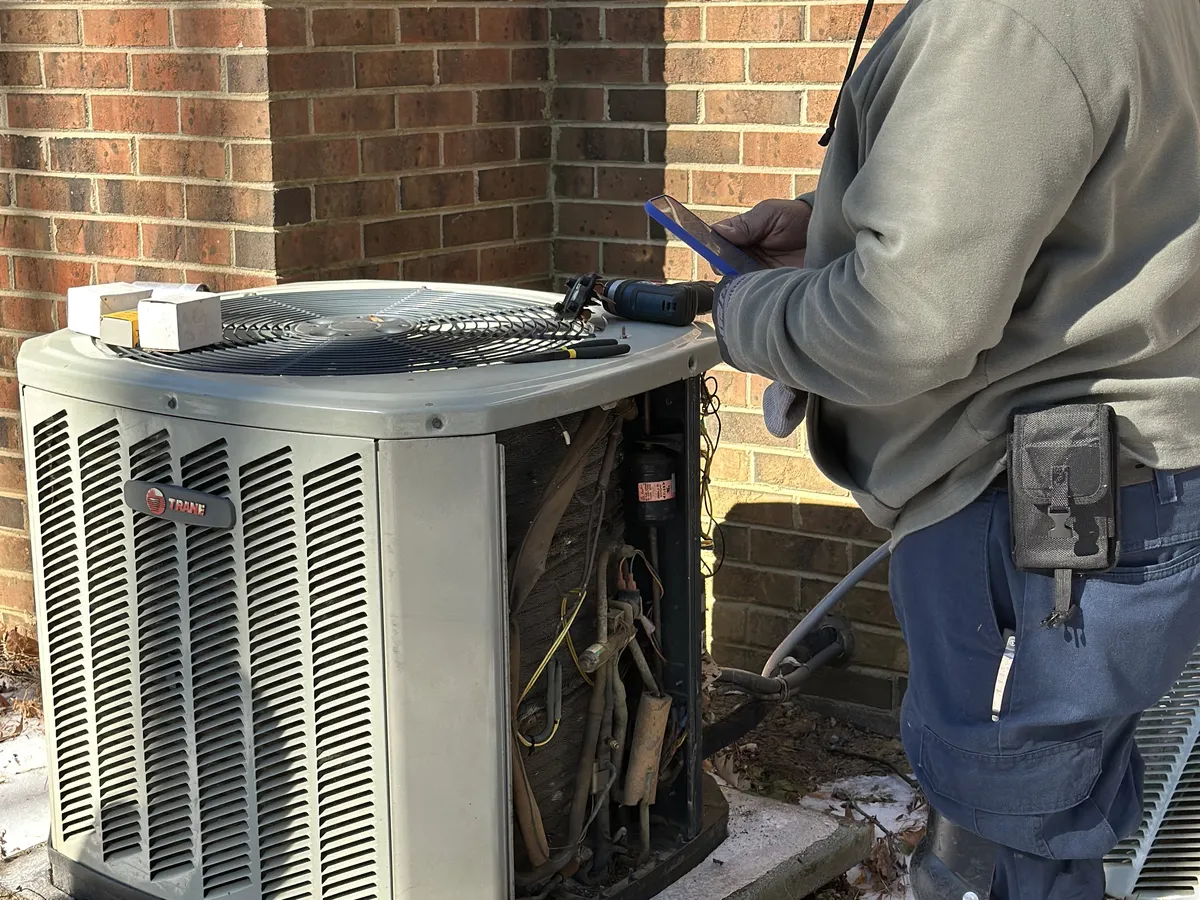
On top of the state program, Duke Energy Smart Saver adds roughly $500 to $1,000 in instant rebates for qualifying high-efficiency heat pump systems, with the amount tied to what you’re replacing and its efficiency rating. The catch with Energy Saver NC is that funding is first-come, first-served, so it pays to apply early in your project rather than after. We keep the running details in our NC HVAC rebates 2026 guide, and we help every customer figure out which programs they qualify for before the install.
Should You Repair or Replace Your AC?
A central AC unit lasts 15 to 20 years when it’s well maintained, according to Carrier. The fastest decision tool is the $5,000 rule: multiply the unit’s age in years by the proposed repair cost, and if the result tops $5,000, replacement is usually the smarter long-term call.
Run the numbers. A 12-year-old unit needing a $300 repair calculates to $3,600, so you fix it. The same unit needing a $500 repair comes to $6,000, which leans toward replacement, especially on an R-410A system facing rising refrigerant costs. Is a 7-year-old unit old? Not really. At that age you repair and keep maintaining unless the repair is major. We go deeper on the timing in our guide to how long an AC unit lasts and the $5,000 rule.
The rule is a starting point, not gospel. Fold in three things it ignores: refrigerant type, available NC rebates, and efficiency gains from a modern system. If two of those three point toward replacement, replace. If your AC is still cooling well and the repair is minor, our advice is usually to keep it running. We say that even when it costs us the bigger sale, and you can read the repair-side math in our AC repair cost guide for Raleigh.
How Do You Pay for a New AC in Raleigh?
Most homeowners finance an AC replacement rather than pay cash, and the terms matter as much as the price. Personal loans for HVAC work commonly range from about 6 to 36 percent APR depending on your credit (NerdWallet), while manufacturer and dealer programs often advertise 0 percent promotional financing for 36 to 60 months (Trane).
Watch the fine print on “same as cash” deferred-interest offers. If you don’t clear the balance inside the promo window, the rate can jump to roughly 27 percent and back-charge interest from day one (Trane). A straightforward fixed-rate loan or a true 0 percent promo is usually the safer choice. Pair whichever option you pick with the NC rebates above, and the out-of-pocket cost on a qualifying system can drop sharply.
Ready to see real numbers for your home? You can get an instant replacement quote online, or schedule a free in-home estimate and we’ll run a proper load calculation, check your ductwork, and tell you honestly whether replacement or one more repair is the right call. New systems also do best on a plan, which is why we offer a Comfort Club maintenance plan to protect the investment.
Frequently Asked Questions
Replacing your AC is one of the larger home decisions you’ll make, and the right number depends on your home, not a national average. Here’s what to hold onto:
- A Raleigh AC replacement runs about $4,000 to $8,000 AC-only, or $8,000 to $17,000 for a full system in 2026.
- Tonnage, SEER2, and ductwork drive your quote more than the brand on the box.
- New R-454B equipment costs an estimated 15 to 30 percent more than the units it replaced.
- The federal 25C credit ended December 31, 2025, but Energy Saver NC rebates of up to $8,000 are active for qualifying households.
If your system is over 12 years old or you’ve already paid for a repair or two this season, get a real assessment before the next heat wave forces the decision. Request a free instant quote, schedule an in-home estimate, or call Icy Hot at (919) 673-7667. We’ll size it right, price it honestly, and tell you which rebates you qualify for.
If your home has no ductwork, or one room the ducted system never reached, compare these numbers against mini-split installation costs in Raleigh before you decide.