If you’re shopping for a new system in Raleigh and a contractor asks whether you want a heat pump or central air, here’s the part nobody tells you up front: in the summer, they’re almost the same machine. A heat pump is a central air conditioner that can also run backwards. It cools your house exactly the way an AC does, then in winter it flips the cycle and heats the house itself instead of handing that job to a furnace.
So the real decision isn’t really “heat pump vs. air conditioner.” It’s whether you want one all-in-one system that heats and cools, or a central AC paired with a separate furnace. In North Carolina’s mild winters, that choice leans toward the heat pump, and hard. The South is already home to roughly 80% of the heat pumps in the country (per the U.S. Energy Information Administration’s 2020 Residential Energy Consumption Survey). Here’s how the two actually compare, what each costs in Raleigh, and when central air still makes sense.
TL;DR: A heat pump and a central air conditioner cool your home the same way, with the same SEER2 efficiency. The difference is heating. A heat pump reverses its cycle to heat the house, while central AC needs a separate furnace to do it. Because a heat pump moves heat instead of burning fuel, it can cut heating electricity use by up to 75% versus electric resistance heat (per the U.S. DOE), and Raleigh’s mild winters play right to its strengths. For most homes here, a heat pump is the better all-in-one value. Central air plus a gas furnace still wins if you already have cheap natural gas. One change for 2026: the federal $2,000 heat pump tax credit expired at the end of 2025, so savings now come from Energy Saver NC and Duke Energy instead.
What’s the Difference Between a Heat Pump and Central Air Conditioning?
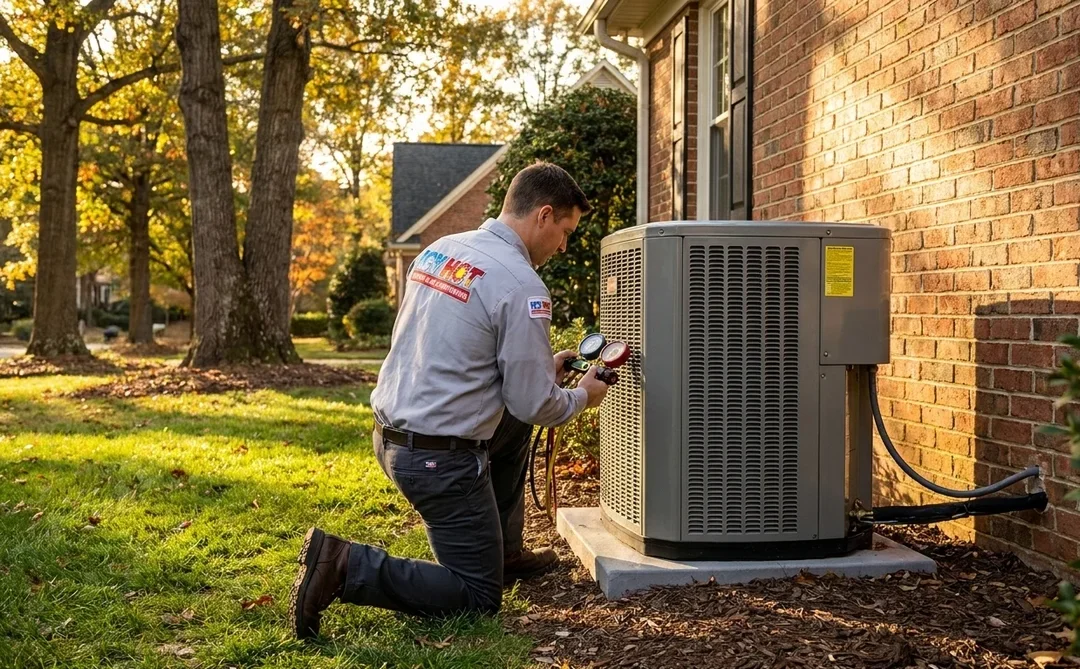
A central air conditioner only cools. It pulls heat out of your house, dumps it outside, and leaves the heating to a separate furnace. A heat pump does that same cooling job in exactly the same way, but it can also run in reverse to heat your home, which means one heat pump replaces both the AC and the furnace. That reversing valve is the whole difference (per U.S. DOE).
Both are split systems. You’ve got an outdoor unit (the condenser) and an indoor unit that moves air through your ducts. With a central AC, the indoor side is a coil sitting on top of a furnace, and the furnace burns gas or runs electric heat strips in winter. With a heat pump, the indoor side is an air handler, and there’s no furnace at all. The heat pump itself handles both seasons by changing which direction it moves heat. If that distinction is new to you, we take it apart in air handler vs. furnace.
In July, the two are doing the identical thing: moving heat from inside your house to the outdoor air. In January, the central AC sits idle while the furnace works, but the heat pump keeps running and pulls heat from the outdoor air into the house. Here’s how they stack up side by side:
Do a Heat Pump and Central AC Cool the Same Way?
Yes. In cooling mode, a heat pump and a central air conditioner are mechanically identical. Both use the same kind of compressor, the same refrigerant cycle, and the same SEER2 efficiency scale. A 16 SEER2 heat pump and a 16 SEER2 air conditioner will cool your Raleigh home and sip about the same electricity doing it (per U.S. DOE and manufacturer data). If you only cared about summer, there’d be no cooling penalty for picking a heat pump.
This trips people up, so it’s worth being blunt about it. A heat pump is not a weaker air conditioner. The outdoor unit in your neighbor’s yard could be either one, and from across the street you couldn’t tell them apart. They both remove heat and humidity from indoor air the same way, and they’re both rated on the same SEER2 yardstick. For context on what those numbers mean, see our guide to what is a good SEER rating for NC homes.
Because cooling is a wash, the entire heat-pump-versus-central-air decision comes down to one question: how do you want to heat the house? That’s where the two systems split, and where North Carolina’s climate starts tilting the scale.
How Does a Heat Pump Heat Your Home?
A heat pump heats by moving heat, not by making it. It pulls warmth out of the outdoor air (even cold air holds plenty of usable heat) and pumps it inside. Because it’s moving heat instead of burning fuel or glowing a resistance coil, a modern heat pump can reduce heating electricity use by up to 75% compared with electric resistance heat (per the U.S. Department of Energy).
The mechanism is the reversing valve. In summer the refrigerant carries heat from inside to outside. In winter the valve flips the flow, so the outdoor coil becomes the one absorbing heat and the indoor coil releases it into your ducts. It sounds like magic, but it’s the same physics as your refrigerator, just pointed the other way.
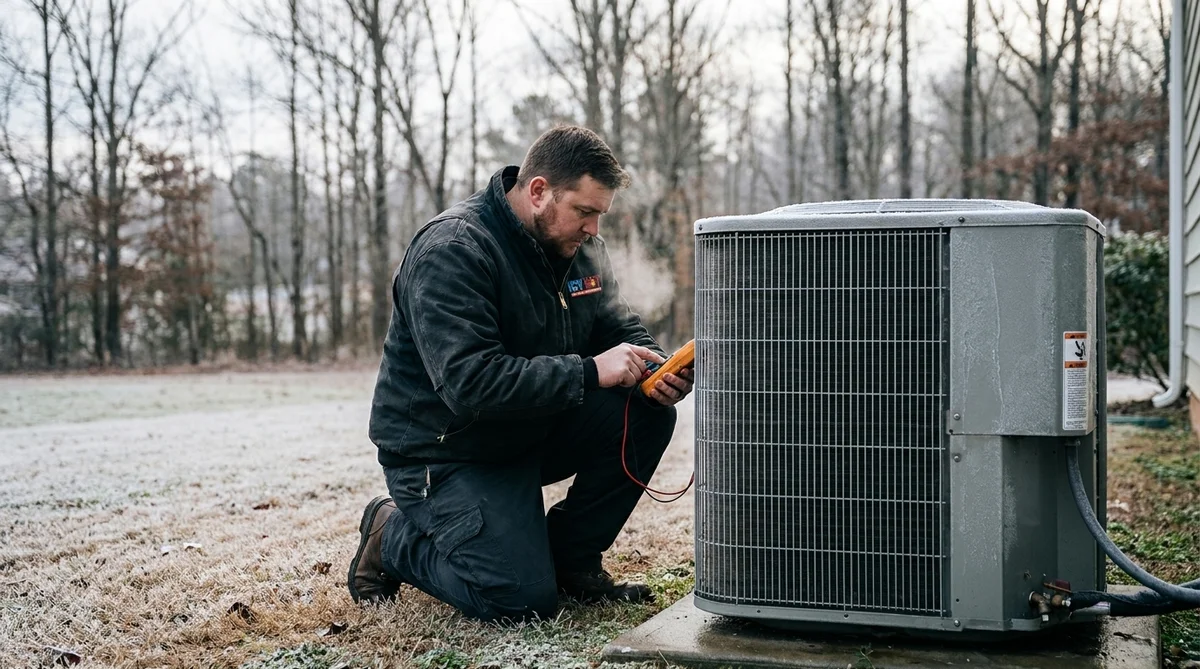
When it gets truly cold, below the system’s “balance point,” a heat pump leans on backup heat to keep up. Most air-source units use electric resistance strips for that, and cold-climate models now run efficiently down to about 5°F (per the U.S. DOE ENERGY STAR Cold Climate spec). In Raleigh, where the coldest mornings rarely sit far below 20°F for long, a properly sized heat pump spends very little of the winter relying on that backup.
From the field (Frankie Asfari, NATE-certified, NC License #L.34356): The number one heat pump call we get in January isn’t a breakdown. It’s “the air coming out of my vents feels cool.” That’s normal. A heat pump puts out supply air around 95°F to 100°F, which is warm but not the 120°F blast you get off a gas furnace. The house still hits your setpoint, it just does it with a gentler, steadier stream of warm air. Once folks understand that, the “complaint” usually turns into “oh, that’s fine.”
Heat Pump vs. Central Air: Which Wins in North Carolina’s Climate?
For North Carolina, the heat pump wins for most homes. Raleigh sits in Climate Zone 3A, a mixed-humid climate with a winter design temperature around 22°F (per IECC climate zone data), which is comfortably inside a standard heat pump’s efficient range. The South already runs on heat pumps: about 80% of all U.S. homes with a heat pump are in the South (per EIA, 2020 RECS).
Climate is the reason. A heat pump is most efficient when the gap between indoor and outdoor temperature is small, and our winters keep that gap small most of the time. The colder a region gets, the more hours a heat pump spends below its balance point leaning on backup heat, which is why a homeowner in Minnesota leans harder on gas. In the Triangle, those deep-cold hours are few, so the heat pump does the heavy lifting on cheap, efficient electricity nearly all season.
The market has already voted. Nationally, heat pumps have outsold gas furnaces every year since 2022, and the most recent count put heat pump sales roughly 28% ahead, the widest margin yet (per Rewiring America, citing AHRI shipment data). In the South that shift happened years ago, because so many homes here were already all-electric with no gas line at the street. For those homes the choice was never really gas versus electric. It was an efficient heat pump versus expensive resistance heat.
How Much Do Heat Pumps and Central AC Cost in Raleigh?
A heat pump system and a central air conditioner cost almost the same to install: roughly $4,200–$7,900 for a heat pump and $3,900–$7,900 for a central AC in 2026 (per This Old House). That near-tie makes sense, because in cooling they’re nearly the same machine. The gap shows up the moment you remember a central AC can’t heat your house.
Add a furnace and the math flips. Pairing a central AC with a separate heating system tacks on roughly $1,700–$10,000 more (per This Old House), so a full AC-plus-furnace setup usually costs more than one heat pump that does both jobs. That’s the comparison most blog posts get wrong: the honest matchup is heat pump versus AC plus furnace, not heat pump versus AC alone, especially in a home that doesn’t already have a gas line. Your real number depends on system size, ductwork condition, and how much refrigerant line we have to run.
Rebates used to tilt this further toward heat pumps, and they still do in NC, just not from the federal government anymore. The federal 25C tax credit that paid up to $2,000 for a qualifying heat pump (and only $600 for a central AC) expired on December 31, 2025 (per the IRS). What’s left for 2026 is bigger anyway for many households: Energy Saver NC offers up to $8,000 toward a heat pump, and Duke Energy adds $500 through Smart $aver. We break it all down in our guide to NC HVAC rebates for 2026.
Which Costs Less to Run in NC, a Heat Pump or AC Plus a Furnace?
In North Carolina’s mild winters, a heat pump is usually the cheapest system to run, and it isn’t close versus electric resistance heat. A heat pump can cut heating electricity use by up to 75% compared with electric baseboard or an electric furnace (per U.S. DOE). Against a gas furnace, the two are close, with the heat pump typically edging ahead over Raleigh’s short heating season.
Remember that cooling costs are a tie, because in summer it’s the same machine either way. The whole operating-cost difference lives in the heating months. And there, the loser is obvious: old-fashioned electric resistance heat, the kind in baseboard heaters and electric furnaces, costs roughly three times what a heat pump costs to deliver the same warmth. If your home’s only alternative is resistance heat, the heat pump pays for itself on the power bill alone.
The heat-pump-versus-gas call is the genuinely close one, and it swings with energy prices. When natural gas is cheap, a gas furnace can match or slightly beat a heat pump on a brutal cold snap. But Raleigh’s heating season is short, our gas rates aren’t especially low, and the heat pump wins on every cooling month plus most heating hours. Add it all up across the year and the all-electric heat pump usually comes out a little cheaper, with a lot less equipment to maintain.
How Long Does Each System Last?
A central air conditioner typically lasts 15–20 years, while a heat pump averages 10–15 years, because the heat pump runs year-round for both heating and cooling and simply logs more operating hours (per Carrier and ENERGY STAR guidance). A gas furnace often outlives both at 15–20 years or more, since it only works in the winter.
Don’t read too much into the shorter heat pump number, though. It’s a runtime story, not a quality story. A heat pump that heats and cools is doing two jobs, so a decade of year-round service is roughly comparable wear to a central AC’s longer calendar life of summers-only duty. You’re getting the same total work out of the machine, just packed into fewer years.
What actually decides lifespan, for either system, is maintenance. A neglected heat pump with a clogged filter and a dirty coil will quit years early, while a well-kept one runs to the top of its range. Heat pumps need service twice a year (before cooling season and before heating season) because they work in both, versus once a year for an AC. Our maintenance guide and a simple maintenance plan are how you get the full life out of whatever you install, and the same logic drives the repair-versus-replace math down the road.
Should You Choose a Heat Pump, Central Air, or a Dual-Fuel System?
For most Raleigh homes, a heat pump is the right call. It heats and cools from one all-electric system, it fits our mild winters, and it qualifies for the biggest NC rebates. Choose central air plus a gas furnace if you already have cheap natural gas service or you want furnace-level heat on the coldest nights. A dual-fuel system gives you both and lets the home pick the cheaper one automatically.
Here’s the quick framework we use with customers:
Go with a heat pump if any of these apply:
- Your home is all-electric or your only backup is electric resistance heat
- You want one system that does everything, with nothing to burn
- You’re replacing an aging heat pump that’s served you fine
- There’s no natural gas line to your home (common in the Triangle)
- You want to claim the largest Energy Saver NC and Duke Energy rebates
Stick with central air plus a gas furnace if any of these apply:
- Your gas furnace is newer and in good shape, and only the AC needs replacing
- You have genuinely cheap natural gas service
- You strongly prefer the hotter air a furnace pushes on cold nights
- You’re only replacing one half of the system right now
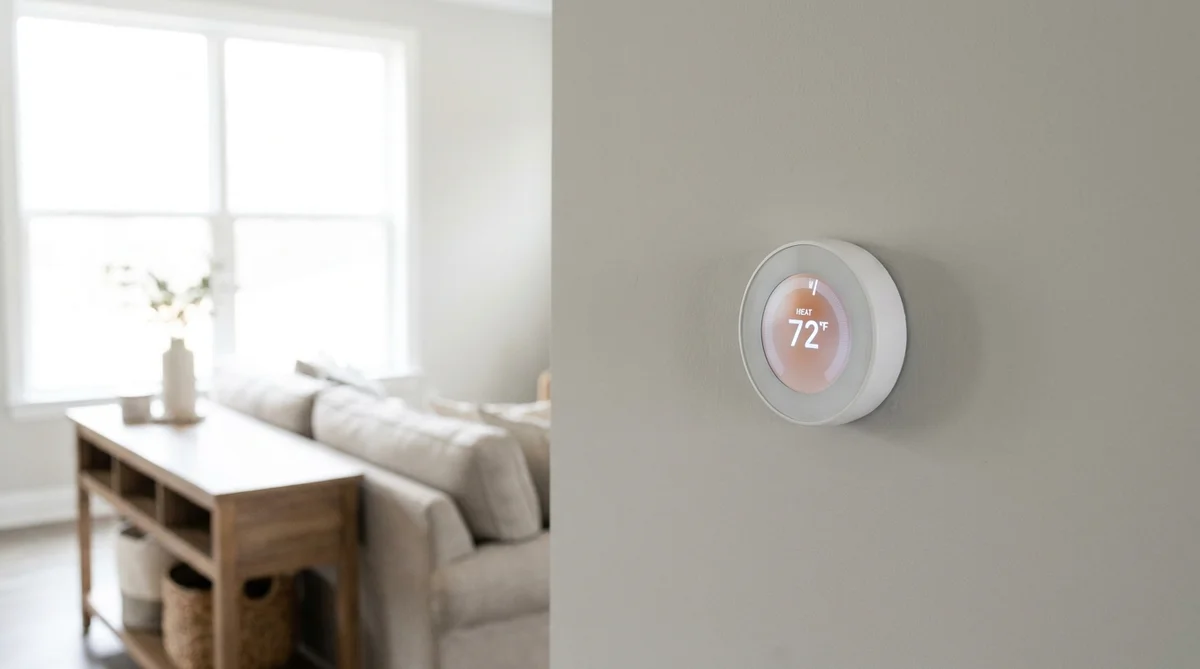
The middle path is dual-fuel, sometimes called a hybrid system. It pairs a heat pump with a gas furnace and lets the thermostat run the efficient heat pump in mild weather, then switch to the furnace only when temperatures drop below the heat pump’s economical range. For a Raleigh home that already has gas, dual-fuel is the comfort-and-efficiency sweet spot, and it’s worth a conversation if you’re replacing both halves at once. Not sure which way your home leans? That’s exactly the kind of thing we’ll sort out on a free in-home estimate, and the same expert eye that handles heat pump repairs across the Triangle.
Frequently Asked Questions
Quick answer for Raleigh homes: If your home is all-electric, has no gas line, or relies on electric resistance backup, choose a heat pump. It heats and cools from one system, fits our mild winters, and earns the biggest NC rebates. If you already have a healthy gas furnace and cheap gas, keep central air and replace only the AC. Replacing both at once with gas on site? Ask us about dual-fuel.
The Bottom Line for Raleigh Homeowners
Heat pump versus central air sounds like a cooling decision, but it’s really a heating decision in disguise. In summer the two are the same machine. In our climate, the all-in-one heat pump is the better fit for most homes, and the numbers back it up. Here’s what matters:
- A heat pump and a central AC cool identically, on the same SEER2 scale.
- The difference is heat: a heat pump reverses to heat the house, central AC needs a furnace.
- Heat pumps cut heating electricity up to 75% versus electric resistance heat.
- Raleigh’s mild Zone 3A winters are close to ideal for a heat pump.
- A heat pump replaces both AC and furnace, so it often costs less than AC plus furnace.
- Central air plus gas still wins with cheap natural gas; dual-fuel splits the difference.
- The federal $2,000 credit ended in 2025; Energy Saver NC and Duke rebates carry 2026.
Still deciding between a heat pump and central air for your Raleigh home? We’ll run a proper Manual J load calculation, check your ductwork and whether you’ve got gas on site, walk you through the rebate-eligible options, and tell you straight which system actually fits your house and budget. Call Icy Hot at (919) 673-7667 or request a free instant quote.
Comparing ductless against a central system instead of a ducted heat pump? We break that decision down separately in mini-split vs. central air.
Ductless mini-splits are heat pumps too, and they skip the ductwork entirely. See our guide to mini-split installation costs in Raleigh for what a one-zone or whole-home ductless project actually runs.
And if the furnace side of that comparison is the part giving you trouble, our guide to the signs your furnace needs replacing covers when a repair is worth it and when it is not.