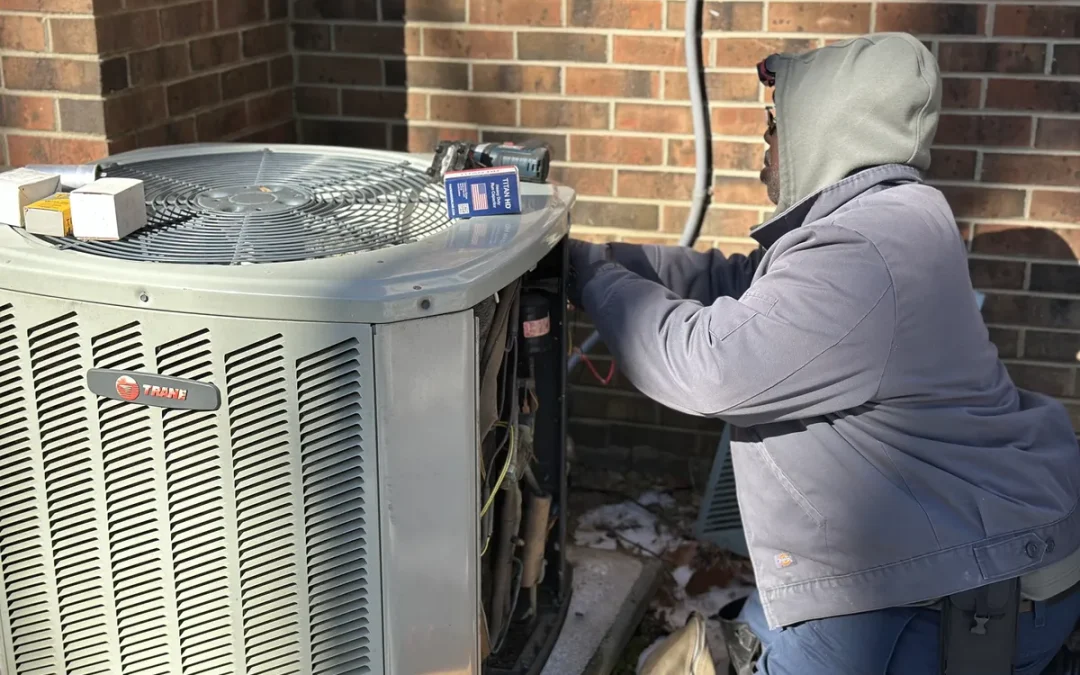
Heat pumps have outsold gas furnaces in the United States every year since 2021, with Americans purchasing 32% more air-source heat pumps than gas furnaces in 2024 alone (Canary Media, citing AHRI data). If you’re one of the millions of Triangle homeowners relying on a heat pump to stay warm this winter, you need to know when yours is calling for help.
Catching problems early is the difference between a $200 fix and a $2,000 emergency. Here are the seven warning signs that your heat pump needs professional repair — plus what each one actually costs and when to call.
TL;DR: The average heat pump repair in the U.S. costs $409, with most falling between $161 and $660 (HomeAdvisor, 2025). Watch for strange noises, rising bills, inconsistent temps, ice buildup, short cycling, water leaks, and mode-switching failures. Don’t wait — small problems escalate fast.
How Do Raleigh Winters Stress Your Heat Pump?
Today’s heat pumps can reduce electricity use for heating by up to 75% compared to electric resistance heating (U.S. Department of Energy). But that efficiency depends on your system running properly — and Raleigh’s winters test every component.
Unlike furnaces that generate heat by burning fuel, heat pumps extract warmth from outdoor air. That works well here most of the time. But our weather creates specific stresses that other climates don’t:
- Temperature swings of 20–30°F in a single day — forcing the system to constantly adjust between operating modes
- Winter humidity — accelerating outdoor coil icing and increasing defrost cycle frequency
- Shoulder season whiplash — days in the 60s followed by nights in the 20s stress the reversing valve as it flips between heating and cooling
According to the U.S. Department of Energy, a properly functioning air-source heat pump delivers two to four times more heat energy than the electrical energy it consumes — roughly 10,300 Btu per kilowatt-hour versus just 3,400 Btu for electric resistance heating. When something goes wrong, you lose that 3× efficiency advantage and your electricity bills spike.
So how do you know when your heat pump is struggling? Here are the seven signs.
Strange Noises or Unusual Odors
Heat pumps have an average service life of 15 years (DOE/ASHRAE), and mechanical components start wearing well before that. A healthy heat pump produces a consistent low hum. Anything else is worth investigating.
Watch for these specifically:
- Grinding or metal-on-metal sounds: Bearing failure in the compressor or fan motor. Continuing to operate risks expensive secondary damage.
- Loud popping or banging: Could indicate refrigerant issues, loose hardware, or a failing compressor. Some popping during defrost cycles is normal as ice cracks off the coil.
- Buzzing without operation: Electrical issue — potentially a failing contactor or capacitor.
- Musty odors from vents: Mold growth on the indoor coil or in ductwork, which Raleigh’s humidity makes more common than in drier climates.
- Burning smell: Overheating electrical component. Turn the system off immediately.
Normal sounds include a gentle whooshing during defrost and a click when the system starts or switches modes. Hear something new? Don’t wait to find out what it is.
Are Your Energy Bills Climbing Without Explanation?
The difference between a well-maintained heat pump and a neglected one ranges from 10% to 25% in energy consumption (U.S. Department of Energy). If your bills are rising and your rates haven’t changed, your system is telling you something. Here’s what to look for:
- Bills 20%+ higher than the same month last year (controlling for rate increases)
- Auxiliary/emergency heat running frequently — check the “AUX” or “EM HEAT” indicator on your thermostat. Emergency heat strips use roughly 3× more electricity than normal heat pump operation, based on the DOE’s Btu-per-kWh comparison.
- System running constantly without reaching the set temperature
Here’s the math in plain terms: a heat pump in normal mode delivers about 10,300 Btu per kilowatt-hour of electricity, while emergency heat strips deliver only about 3,400 Btu per kilowatt-hour (DOE). That means every hour on emergency heat costs roughly three times more than it should. A sudden bill spike suggests a specific failure; a gradual increase over months suggests declining efficiency.
Inconsistent Temperatures From Room to Room
A properly functioning heat pump should maintain your set temperature with no more than a 2–3°F variance between rooms. If you’re seeing 5°F or greater differences — or the system can’t hold the thermostat setting at all — something is wrong. What’s going on?
- Low refrigerant: The most common cause. A slow leak reduces heating capacity gradually, and you might not notice until a cold snap hits.
- Failing compressor: Can’t build adequate pressure to move heat efficiently.
- Ductwork issues: Leaks or blockages prevent heated air from reaching certain rooms. This is worth an HVAC inspection to rule out.
- Stuck reversing valve: The valve may be stuck in an intermediate position, delivering lukewarm air instead of actual heat.
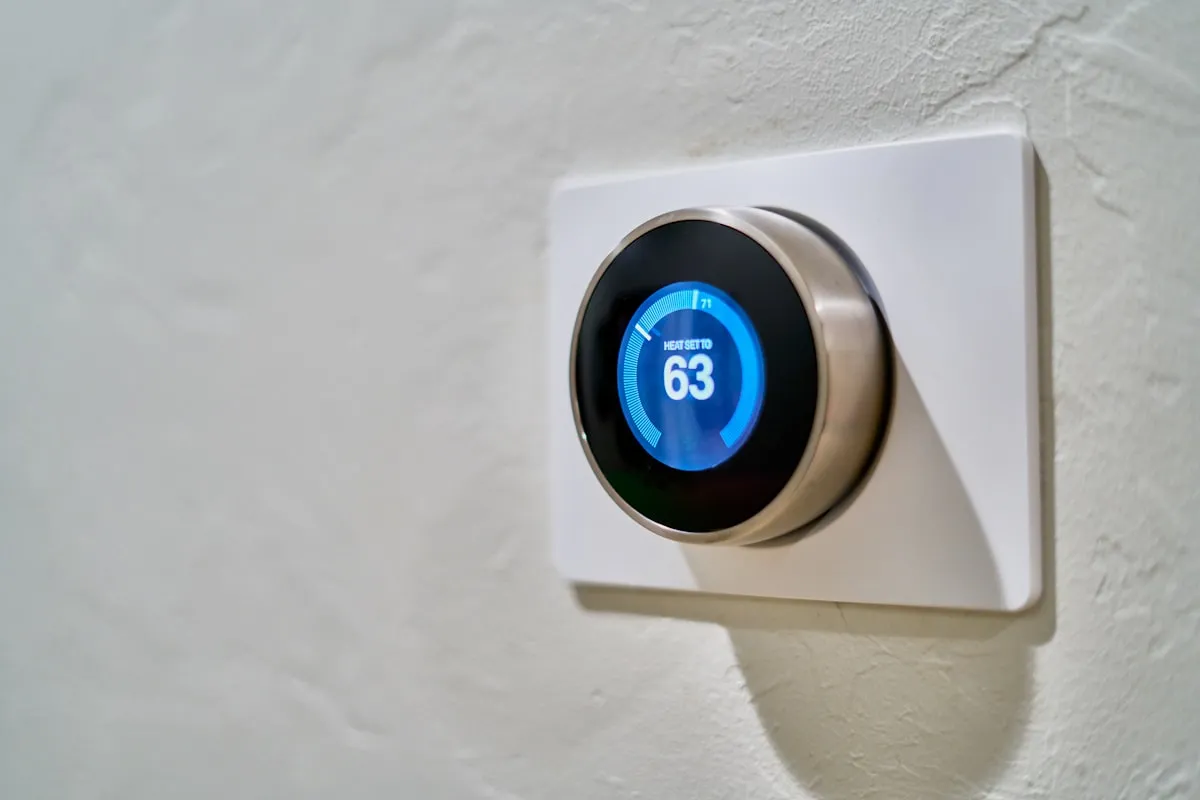
If your thermostat reads 68 but the bedroom feels like 60, don’t just pile on blankets. That gap usually means your heat pump needs a refrigerant check or compressor evaluation.
Ice Buildup on the Outdoor Unit
Some frost on the outdoor coil is completely normal during winter operation. Your heat pump’s defrost cycle should clear it every 30 to 90 minutes. But there’s a big difference between a light frost that melts and a unit encased in ice. Here’s what to watch for:
- Ice covering the entire coil: Defrost cycle failure — faulty timer, control board, or sensor
- Ice on the bottom of the unit: Blocked drainage, debris around the base, or the unit sinking into the ground
- Ice on refrigerant lines: Low refrigerant charge or restricted airflow through the outdoor coil
- Ice that never fully clears: Reversing valve may not be switching to defrost mode properly
Never try to chip or scrape ice off the coil. The aluminum fins are delicate and easy to damage. If the defrost cycle isn’t clearing ice on its own, it’s time to call for heat pump repair.
Short Cycling or Constant Running — What’s the Difference?
Short cycling means the system turns on, runs for 2–5 minutes, shuts off, and restarts shortly after. Constant running means it never reaches the set temperature and runs nonstop. Both are hard on your compressor and both inflate your energy bills. But they point to different problems.
Short cycling causes:
- Oversized system — common in Raleigh homes where the original installer didn’t perform a Manual J load calculation
- Refrigerant leak causing safety lockouts
- Dirty filter restricting airflow
- Faulty thermostat or thermostat placed near a heat source or drafty area
Constant running causes:
- Extremely cold weather — below 25°F, longer run times can be normal for heat pumps
- Low refrigerant reducing heating capacity
- Dirty coils reducing heat transfer
- Undersized system for the home’s square footage
How do you tell normal from abnormal? If temperatures are above 30°F and your system hasn’t shut off in two hours, something is wrong. If it’s cycling on and off every few minutes regardless of temperature, that’s also a problem worth addressing before it kills the compressor.
Water Leaks or Excess Condensation
Heat pumps produce condensation during both heating and cooling cycles — that’s normal. What isn’t normal is water where it shouldn’t be. The condensate drain line carries moisture away from the indoor unit, and the outdoor unit’s base pan handles defrost runoff. Problems show up when those systems fail:
- Water pooling around the indoor unit: Clogged condensate drain line (the most common cause), cracked drain pan, or a frozen coil thawing unexpectedly
- Excessive water around the outdoor unit in winter: Some defrost runoff is normal, but pooling may indicate a drainage problem or failing defrost cycle
- Ice dams at the outdoor unit base: Water refreezing around the foundation can damage the unit and its mounting pad over time
- Condensation on walls or windows: May indicate the system isn’t dehumidifying properly — often caused by an oversized system or refrigerant issue
Don’t ignore indoor water leaks especially. A clogged drain line is a cheap fix now, but water damage to floors and drywall is not.
Your Heat Pump Won’t Switch Between Heating and Cooling
The reversing valve is what makes a heat pump a heat pump. It reverses refrigerant flow to switch between heating and cooling modes. When this valve fails, you’ll notice it fast — especially during Raleigh’s variable winters where you might need heat at night and cooling during a 65°F afternoon.
Reversing valve failure symptoms:
- System only heats or only cools — stuck in one mode
- Lukewarm air in both modes — valve stuck partway
- Random or inappropriate mode switching
Reversing valve replacement typically runs $400 to $800 including parts and labor (HomeAdvisor, 2025). It’s not cheap, but it’s far less than the $4,000+ cost of replacing the entire system. This is strictly a professional repair — it involves brazing refrigerant lines and recharging the system.
When Should You Call for Emergency vs. Scheduled Service?
Not every heat pump issue is an emergency. But some absolutely are — particularly when there’s a risk of frozen pipes, fire, or electrical hazard. Here’s how to decide:
Call for Emergency Service
- Complete heating failure when temperatures are below freezing (pipe freeze risk)
- Burning smells or visible smoke from the unit
- Electrical sparking
- System making loud banging or screeching sounds and won’t shut off
Schedule Prompt Service (Within 24–48 Hours)
- Rising energy bills without explanation
- Ice buildup that doesn’t clear after multiple defrost cycles
- Short cycling or constant running
- Inconsistent temperatures between rooms
- Water leaks near the indoor or outdoor unit
- System stuck in one mode
- Any noise that’s new or getting worse
How Much Does Heat Pump Repair Cost in Raleigh?
The average heat pump repair in the U.S. costs $409, with most homeowners spending between $161 and $660 (HomeAdvisor, 2025). Compressor replacements are the big-ticket exception, running $800 to $3,500. Here’s a breakdown by component:
- Capacitor replacement: $150–$300
- Refrigerant recharge + leak repair: $200–$500
- Defrost control board: $200–$400
- Blower motor replacement: $300–$600
- Reversing valve replacement: $400–$800
- Compressor replacement: $800–$3,500
When Does Repair vs. Replacement Make Sense?
The general industry guideline: if the repair cost exceeds 50% of what a new system would cost and your heat pump is past the midpoint of its expected lifespan (7–8 years), replacement is usually the smarter investment. New heat pump systems range from $4,000 to $8,000 installed depending on size and efficiency rating.
Worth noting: ENERGY STAR-certified heat pumps currently qualify for a federal tax credit of up to $2,000, valid through December 31, 2032. If you’re facing a $2,000+ repair on a system that’s 12 or 13 years old, a new high-efficiency unit with a $2,000 tax credit starts to look like the better deal. Check out our heat pump installation page for what to expect.
Keep Your Heat Pump Running All Winter
Heat pump problems don’t fix themselves, and they almost always get worse — and more expensive — over time. Regular heat pump maintenance is the best way to catch issues before they become emergencies. The DOE estimates that the gap between a well-maintained and severely neglected heat pump can mean 10–25% higher energy bills.
If you’ve noticed any of these seven warning signs, the smartest move is an early repair. Our NATE-certified technicians serve Raleigh, Durham, Cary, Apex, and the entire Triangle with same-day and 24/7 emergency service.
Call (919) 673-7667 or schedule your heat pump inspection online. We also offer maintenance packages to keep your system running efficiently year-round.
