HVAC Repair in Raleigh, NC

Fast diagnosis, upfront pricing, same-day service

Professional HVAC Repair in the Triangle

Something is wrong with your HVAC system — maybe it is not keeping up with the temperature, making strange noises, or your energy bills have spiked without explanation. Whatever the symptom, the sooner you get it diagnosed, the less it usually costs to fix.

Icy Hot’s NATE-certified technicians use diagnostic tools and years of experience to pinpoint problems fast. We explain what we find in plain English, provide an upfront quote, and do not start work until you say go. Most repairs are completed on the same visit.
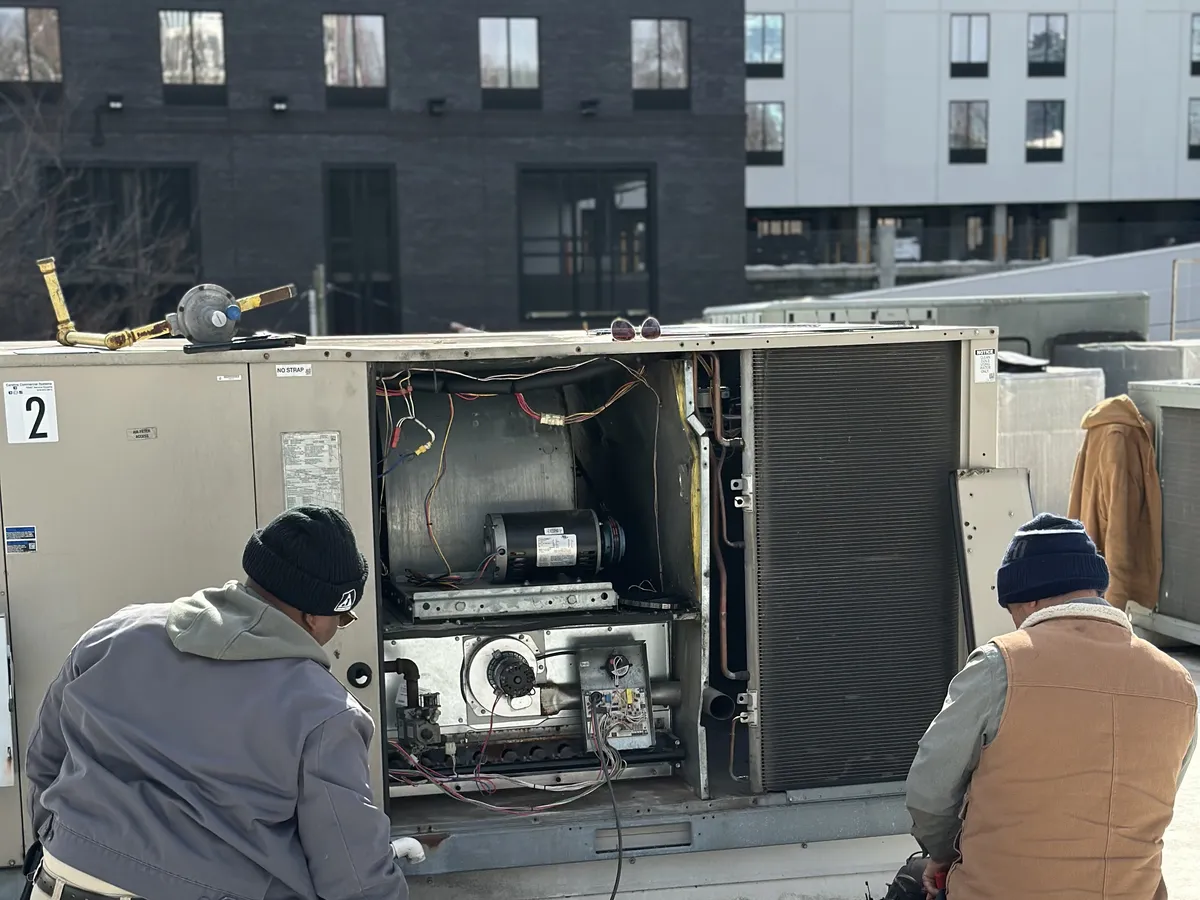
Two HVAC technicians diagnosing and repairing a commercial rooftop package unit with exposed blower motor and wiring

Signs You Need This Service

  • System underperforming or inefficient
  • Unusual noises or odors
  • Inconsistent temperatures
  • Higher energy bills
  • System cycling frequently

Our HVAC Repair Process

Whether your system is not heating, not cooling, or both, here is how we get it fixed:

  1. Call With Details — When you call (919) 673-7667, tell us what you are experiencing — the more detail, the better. Is the system running but not conditioning? Making unusual sounds? Cycling on and off? This helps us prepare for an efficient visit.
  2. Complete System Diagnostic — We test both heating and cooling components — compressor, blower motor, heat exchanger or heating elements, refrigerant charge, thermostat, electrical connections, and ductwork. We check the full system because HVAC problems often involve multiple components.
  3. Clear Pricing Before Work Begins — We explain the diagnosis in plain terms and give you a written estimate. You approve the repair cost before we start. If we discover additional issues during the repair, we stop and discuss them with you first.
  4. Expert Repair — Our NATE-certified technicians handle the repair using quality parts backed by manufacturer warranties. Most HVAC repairs are completed the same day, typically within one to three hours.
  5. Full System Verification — We test both heating and cooling modes, verify airflow at the registers, check thermostat operation, and confirm the system cycles properly before we consider the job done.

Why Choose Icy Hot?

Your comfort and peace of mind are what drive everything we do. Here is what that means for you:

  • Diagnosed Right the First Time — Our NATE-certified technicians hold the industry’s top credential, so you are not paying for guesswork or repeat visits
  • No Surprise Bills — You see and approve every cost before we start. If the price changes, we stop and talk to you first
  • Premium Equipment, Fair Prices — As an Authorized Lennox Dealer, we offer top-rated systems that lower your energy bills and last longer
  • Help When You Need It Most — Day or night, a real person answers your call. No voicemail, no waiting until Monday
  • Your Home Is Protected — Fully licensed (NC #L.34356) and insured, so your property and investment are covered on every job

Brands We Service

As an Authorized Lennox Dealer, we specialize in Lennox systems. We also expertly service and install all major brands including Carrier, Trane, Rheem, Goodman, York, Amana, Daikin, Bryant, Coleman, and Ruud.

Frequently Asked Questions

How much does HVAC repair cost in Raleigh?
HVAC repair costs in the Raleigh area typically range from $150 to $450 for common issues, with the national average around $350. A diagnostic service call usually costs $100 to $250, which covers the technician’s assessment and often applies toward the repair if you proceed. Specific repair costs vary widely: thermostat replacement runs $150 to $290, capacitor replacement $150 to $400, blower motor replacement $400 to $700, compressor repair $800 to $3,000, and evaporator coil replacement $600 to $2,400. At Icy Hot, we provide upfront pricing before any work begins — call (919) 673-7667 for a transparent estimate with no hidden fees.
Should I repair or replace my HVAC system?
HVAC professionals often use the “$5,000 rule” to guide this decision: multiply your system’s age by the estimated repair cost. If the result exceeds $5,000, replacement is usually the better investment. For example, a 12-year-old system needing a $500 repair (12 x $500 = $6,000) is a candidate for replacement. Other factors favoring replacement include needing three or more repairs within three years, using R-22 refrigerant (now phased out and expensive), energy bills steadily increasing, or safety concerns like a cracked heat exchanger. Systems under 10 years old with a single moderate repair typically warrant fixing rather than replacing.
What are the most common HVAC problems homeowners face?
The most frequent HVAC issues we see in Triangle-area homes include dirty or clogged air filters (the number one cause of system inefficiency), refrigerant leaks causing poor cooling, faulty thermostats giving inaccurate readings, worn capacitors preventing the system from starting, clogged condensate drain lines causing water leaks or system shutdowns, and failing blower motors reducing airflow. Raleigh’s high summer humidity adds extra strain — evaporator coils can freeze if refrigerant is low, and condensate drains handle significantly more moisture than in drier climates. Many of these problems are preventable with regular maintenance, which is why we recommend biannual tune-ups.
Why is my HVAC making strange noises?
Different sounds indicate different problems. A grinding or screeching noise usually means worn bearings in the blower motor or fan — this needs immediate attention before the motor seizes. Banging or clanking often indicates a loose or broken part inside the compressor or blower assembly. A high-pitched squealing from an older system could be a slipping belt. Buzzing from the outdoor unit may signal electrical issues, a failing contactor, or loose components. Clicking sounds during startup are normal, but persistent clicking could mean a faulty relay or control board. A hissing or bubbling sound points to a refrigerant leak. Never ignore unusual HVAC noises — what starts as a minor issue can quickly become a major repair.
How long does an HVAC repair take?
Most common HVAC repairs are completed in one to three hours during a single visit. Simple fixes like thermostat replacement, capacitor replacement, or cleaning a clogged condensate drain typically take under an hour. Mid-range repairs such as blower motor replacement or electrical component work usually require two to three hours. More complex repairs like compressor replacement or evaporator coil replacement may take four to eight hours and sometimes require ordering parts, which can add one to three business days. Emergency repairs — like no heat during a cold snap or no AC during a Raleigh summer heat wave — are prioritized. Icy Hot offers 24/7 emergency service to minimize your wait time.
Can I fix my HVAC system myself?
Homeowners can safely handle a few basic tasks: replacing air filters (recommended every 30 to 90 days), clearing debris from around the outdoor unit, cleaning visible dust from supply vents, and checking thermostat batteries and settings. However, most HVAC repairs require professional expertise and should never be attempted as DIY projects. Working with refrigerant requires EPA 608 certification and is illegal without it. Electrical components carry serious shock and fire risks. Gas furnace repairs involve carbon monoxide hazards. In North Carolina, HVAC work must be performed by licensed professionals per state regulations. Attempting repairs yourself can also void manufacturer warranties and create safety hazards.
What should I do if my HVAC system stops working completely?
First, check the basics: verify the thermostat is set correctly and has power, check that the circuit breaker hasn’t tripped, and confirm the system switch (usually near the indoor unit) is in the ON position. Replace the air filter if it’s dirty — a severely clogged filter can cause system shutdown. For heat pumps, check if the outdoor unit is frozen over (in winter) or blocked by debris. If none of these steps restore operation, you need a professional diagnosis. A complete system failure could indicate a failed compressor, blown fuse, control board malfunction, or electrical issue. Contact Icy Hot at (919) 673-7667 for 24/7 emergency repair — we serve the entire Raleigh-Durham-Triangle area with same-day response.

Need Help Now?

(919) 673-7667

Available 24/7 for Emergencies

Schedule Service

Special Offer
$25
OFF
Any HVAC Service
Mention when you call

Ready for Year-Round Comfort?

Licensed & insured HVAC experts serving the Triangle since 2008

(919) 673-7667