Heating Installation in Raleigh, NC

Properly sized heating systems for every room in your home

Heating Installation for Triangle Homeowners

Ready to stop fighting your old heating system? Whether your furnace is 15 years old and losing efficiency, your repair bills are piling up, or you are building a new home, the right heating installation means even warmth in every room and lower energy bills for years to come.

Choosing and sizing a heating system is not one-size-fits-all — your home’s square footage, insulation, ductwork, and your family’s comfort preferences all factor in. Icy Hot’s NATE-certified technicians perform a proper load calculation and walk you through your options so you get the right system at the right price.
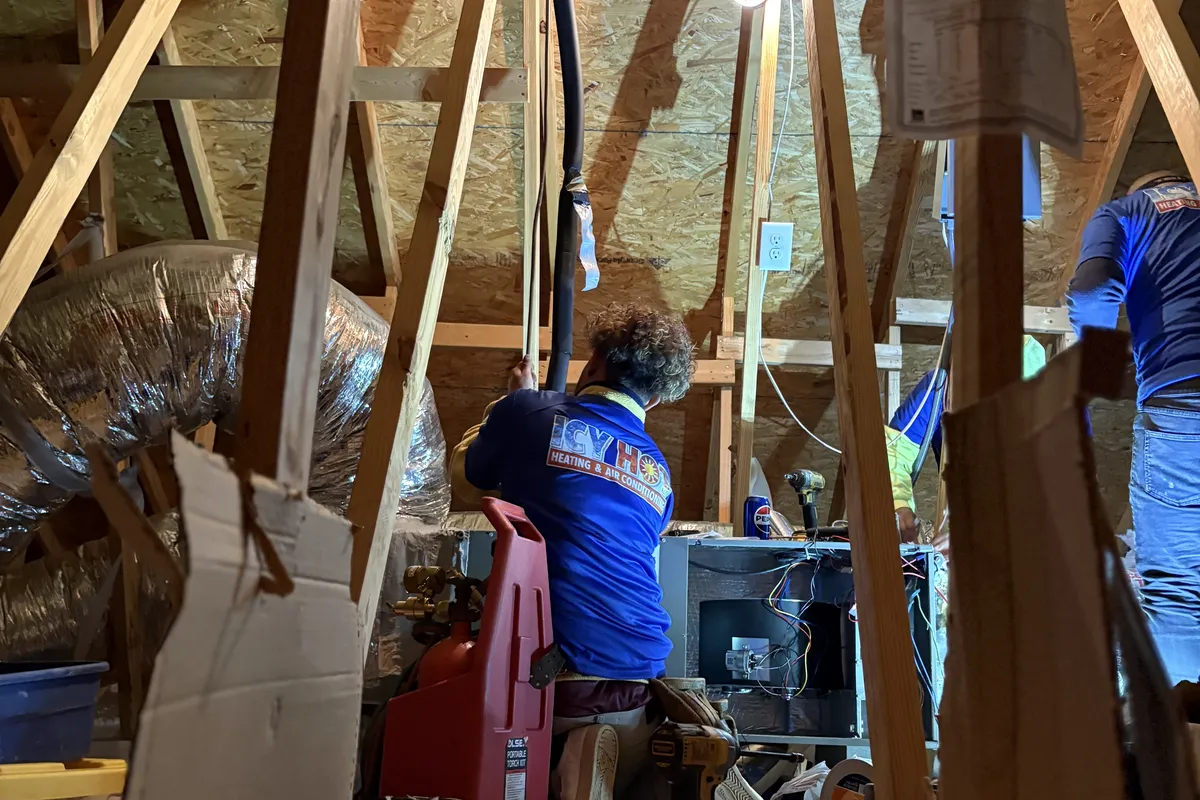
Two Icy Hot Heating and Air Conditioning technicians installing a heating system and air handler in a residential attic

Signs You Need This Service

  • No heat or weak airflow
  • Strange noises from the system
  • Thermostat not responding
  • Pilot light issues
  • Rising energy bills
  • Uneven heating between rooms

Our Heating Installation Process

Installing a new heating system is one of the most important home investments you will make. Here is our approach:

  1. In-Home Consultation — We evaluate your current heating system, ductwork, insulation, and fuel source. We discuss your comfort goals, budget, and whether you want to upgrade to a higher-efficiency system or switch fuel types.
  2. Heat Load Calculation — We calculate the exact heating capacity your home needs based on square footage, insulation, window area, and Raleigh’s climate data. Proper sizing prevents short-cycling, cold spots, and wasted energy.
  3. System Selection — We present equipment options — furnaces, heat pumps, or dual fuel systems — with clear comparisons of efficiency ratings, warranty coverage, and estimated annual heating costs. We help you choose the best system for your home and budget.
  4. Professional Installation — Our team removes the old equipment, installs the new heating system, connects gas or electrical supply, and ensures all ductwork connections are properly sealed. Every installation meets NC mechanical code requirements.
  5. Testing and Owner Orientation — We run the new system through multiple heating cycles, measure supply air temperature and airflow, check for gas leaks or electrical issues, and walk you through thermostat operation, filter changes, and maintenance schedules.

Why Choose Icy Hot?

Your comfort and peace of mind are what drive everything we do. Here is what that means for you:

  • Diagnosed Right the First Time — Our NATE-certified technicians hold the industry’s top credential, so you are not paying for guesswork or repeat visits
  • No Surprise Bills — You see and approve every cost before we start. If the price changes, we stop and talk to you first
  • Premium Equipment, Fair Prices — As an Authorized Lennox Dealer, we offer top-rated systems that lower your energy bills and last longer
  • Help When You Need It Most — Day or night, a real person answers your call. No voicemail, no waiting until Monday
  • Your Home Is Protected — Fully licensed (NC #L.34356) and insured, so your property and investment are covered on every job

Brands We Service

As an Authorized Lennox Dealer, we specialize in Lennox systems. We also expertly service and install all major brands including Carrier, Trane, Rheem, Goodman, York, Amana, Daikin, Bryant, Coleman, and Ruud.

Frequently Asked Questions

How much does a new heating system cost to install in Raleigh?
In the Raleigh-Durham market, a new gas furnace installation typically costs $3,800 to $10,000, while a heat pump installation ranges from $4,200 to $12,000 depending on efficiency rating, brand, and system capacity. A complete HVAC system replacement (furnace or heat pump plus air conditioning) runs $7,500 to $15,000 for most Triangle-area homes. These prices include equipment, labor, permits, and standard installation. Factors that push costs higher include ductwork modifications, upgrading from a furnace to a heat pump (which requires new refrigerant lines), or selecting a premium high-efficiency model. Icy Hot Heating & Air Conditioning provides detailed written estimates with no hidden fees — call (919) 673-7667 to schedule a free in-home consultation.
Should I install a furnace or heat pump in North Carolina?
Heat pumps are generally the better choice for North Carolina homes because of our mild climate. They operate at 300-400% efficiency in moderate temperatures, meaning they produce 3 to 4 units of heat for every unit of electricity consumed. Since Raleigh winters rarely sustain temperatures below 25 degrees Fahrenheit, heat pumps maintain excellent efficiency throughout most of the season. They also provide air conditioning in summer, eliminating the need for a separate cooling system. Gas furnaces remain ideal for homeowners who want the fastest possible heat during occasional hard freezes, or for homes without adequate electrical panel capacity for a heat pump. A dual-fuel system — pairing a heat pump with a gas furnace backup — offers optimal efficiency at every temperature.
How long does a heating system installation take?
A standard heating system replacement — where the new unit is the same type and goes in the same location — typically takes 4 to 8 hours and is completed in a single day. A straight furnace-to-furnace swap with existing ductwork in good condition often finishes in 4 to 6 hours. If ductwork modifications, gas line changes, or electrical upgrades are needed, the job may extend to 6 to 10 hours or occasionally stretch into a second day. Switching from a furnace to a heat pump takes longer (typically a full day) because it involves running new refrigerant lines and possibly upgrading the electrical panel. Icy Hot Heating & Air Conditioning’s installation teams arrive with all materials staged, so most homeowners have heat restored before dinner.
What size heating system do I need for my home?
Proper sizing requires a Manual J load calculation that accounts for your home’s square footage, insulation levels, window types, ceiling height, orientation, and local climate data. As a rough guide, Raleigh-area homes typically need 25 to 35 BTU per square foot — so a 2,000-square-foot home might require a 50,000 to 70,000 BTU furnace. However, never choose based on square footage alone. An oversized system short-cycles, wasting energy and wearing out components prematurely. An undersized system runs constantly and cannot maintain comfort during cold snaps. A qualified installer should always perform a load calculation before recommending equipment. Icy Hot Heating & Air Conditioning includes a free Manual J calculation with every installation estimate.
Are there tax credits or rebates for installing a new heating system in 2026?
Yes. Under the federal Inflation Reduction Act, homeowners can claim a tax credit of up to $2,000 for qualifying heat pumps and up to $600 for high-efficiency gas furnaces (97%+ AFUE) installed in 2026. Income-qualified households may also be eligible for HOMES rebates covering up to $8,000 toward heat pump installation. Duke Energy offers additional rebates for qualifying ENERGY STAR-rated heat pumps and smart thermostats for customers in the Raleigh service territory. State-level incentives can change annually, so we recommend checking the DSIRE database (dsireusa.org) or asking your installer for current programs. Icy Hot Heating & Air Conditioning helps customers identify every available incentive to maximize savings on their new system.
What AFUE or HSPF2 rating should I look for in a new heating system?
For gas furnaces, we recommend at least 90% AFUE (Annual Fuel Utilization Efficiency) for Raleigh-area homes. Mid-range models at 92-95% AFUE offer an excellent balance of performance and affordability, while premium 96-98% AFUE units provide maximum fuel savings for homeowners who plan to stay in their home long-term. For heat pumps, look for an HSPF2 rating of 8.5 or higher for solid heating efficiency. Top-tier models reach 13+ HSPF2 with variable-speed inverter compressors that modulate output to match demand. The federal minimum is 81% AFUE for furnaces and approximately 7.5 HSPF2 for heat pumps — meeting minimums saves upfront cost but results in higher utility bills over the system’s 15-20 year lifespan.
How do I prepare my home for a heating system installation?
Clear a path to the installation area — both the indoor equipment location (utility closet, basement, attic, or garage) and any outdoor components (heat pump condenser pad). Move stored items at least 4 feet from the existing equipment. Ensure the installer will have access to your electrical panel and, for gas systems, the gas shut-off valve. If the installation requires attic work, clear any items blocking attic access. Plan for your home to be without heating for several hours during the swap — in Raleigh’s milder climate, scheduling installation in fall or early spring minimizes discomfort. Keep pets secured in a separate room away from the work area. Your installer will need parking close to the home for equipment delivery, so keep the driveway clear.

Need Help Now?

(919) 673-7667

Available 24/7 for Emergencies

Schedule Service

Special Offer
$25
OFF
Any Heating Service
Mention when you call

Ready for Year-Round Comfort?

Licensed & insured HVAC experts serving the Triangle since 2008

(919) 673-7667