
Raleigh’s average high hits 80°F on May 18, and from there it doesn’t let up until mid-September (NWS Raleigh). That gives you a narrow window to make sure your AC is ready. A spring tune-up isn’t just a good idea. It’s the difference between a $100–$200 maintenance visit now and an $800 emergency repair in July.
Heating and cooling account for 52% of the average home’s energy use (U.S. EIA). That makes your air conditioner the single biggest energy expense in your house, and the one most worth maintaining. This checklist covers what you can do yourself, what a professional handles, what it costs, and when to schedule it so you’re not sweating through a breakdown in August.
TL;DR: Schedule your AC tune-up in March or April, before Raleigh’s first 80°F day on May 18 (NWS Raleigh). A $100–$200 tune-up can cut cooling costs 5–15% (DOE) and extend your system’s life to 15–20 years (Lennox). Six steps are DIY. The rest require a licensed technician.
Why Does Your AC Need a Spring Tune-Up?
Well-maintained AC systems use 5–15% less energy than neglected ones (U.S. DOE). On a system that accounts for half your energy bill, that’s $80–$250 saved per cooling season. Regular maintenance also extends system lifespan significantly. Neglected systems typically last just 10–12 years (ACHR News), while properly maintained units last 15–20 years (Lennox), with the Southeast average landing at 18 years for serviced units (DOE FEMP).
The math is straightforward. A spring tune-up costs $75–$200. An emergency repair in the middle of a Raleigh heat wave? That runs $400–$1,200 (Angi, 2026). A compressor failure pushes past $2,000. And if the whole system needs replacing because years of skipped maintenance shortened its life, you’re looking at $4,000–$7,500.
Put another way: every dollar you spend on preventive maintenance saves roughly $4 in avoided breakdown and repair costs (EPA). That’s before factoring in the comfort of not losing AC on a 95°F day with company coming over.
When Should Raleigh Homeowners Schedule a Spring AC Tune-Up?
According to NWS Raleigh climate normals, the average daily high first reaches 80°F on May 18. Raleigh’s hot season, defined as days averaging above 81°F, runs from May 26 through September 15. That’s nearly four months of heavy AC use. Once May hits, every HVAC company in the Triangle is booked solid with AC repairs and last-minute tune-ups.
The ideal window? March through mid-April. Your system hasn’t been under heavy load since last fall, technicians have open schedules, and there’s time to order parts if something needs replacing. If your system is older than 10 years, scheduling early is even more important. Older units are more likely to have worn capacitors, degraded refrigerant levels, or failing contactors that only show up under a technician’s inspection.
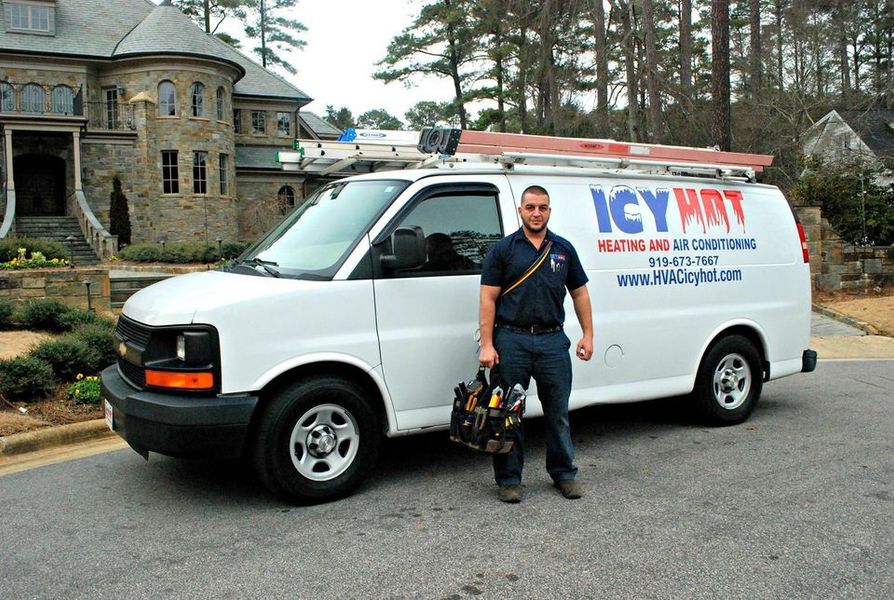
From the field (Frankie Asfari, NATE-certified, NC License #L.34356): In my 22 years in HVAC and 18 years running Icy Hot, I see a 3x spike in emergency AC calls during the first week temperatures stay above 90°F. Systems that sat idle all winter fail under sudden heavy load. A March or April tune-up catches those problems while they’re still cheap to fix.
The DIY Spring AC Checklist: 6 Steps You Can Do Today
You don’t need a license or special tools for these six tasks. Together, they take about 30–45 minutes and handle the most common causes of reduced efficiency. Think of this as the homeowner’s half of the equation.
1. Replace or Clean Your Air Filter
This is the single most impactful thing you can do yourself. A clogged filter forces your system to work harder, increasing energy consumption by 5–15% (U.S. DOE). Check the filter monthly during cooling season and replace it every 1–3 months, depending on whether you have pets, allergies, or heavy dust. Hold the old filter up to a light. If you can’t see through it, it’s past due.
2. Clear Debris from the Outdoor Unit
Your condenser has been collecting leaves, pollen, grass clippings, and cottonwood seeds since last fall. Turn off power at the disconnect box, then remove any debris within two feet of the unit. Gently rinse the fins with a garden hose (never a pressure washer) from the inside out. Bent fins restrict airflow and reduce efficiency. If more than a few are bent, a fin comb costs $10 at any hardware store.
3. Check Your Thermostat Settings
Switch from heating to cooling mode and set the temperature 5°F below room temperature. The system should kick on within a minute or two. If you have a programmable or smart thermostat, update the schedule for spring and summer. ENERGY STAR guidance uses 78°F as a when-home example setting, with higher temperatures when you’re away.
4. Inspect the Condensate Drain Line
The drain line removes moisture your AC pulls from indoor air. Over winter, algae and mold can build up inside. Locate the PVC drain pipe near your indoor unit, pour a cup of white vinegar or diluted bleach through it, and check that water flows freely out the other end. A clogged drain line is one of the most common causes of water damage and emergency AC shutdowns.
5. Open and Clean Supply Vents
Walk through every room and make sure all supply vents and return registers are open and unblocked. Move furniture, rugs, or curtains that might be covering them. Vacuum the vent covers to remove dust buildup. Closed or blocked vents create pressure imbalances that make your system work harder and can cause frozen evaporator coils.
6. Listen for Unusual Sounds
Turn the system on and stand near both the indoor and outdoor units. Grinding, squealing, buzzing, or rattling noises all point to specific problems: a failing blower motor, loose hardware, electrical issues, or refrigerant leaks. Catching these early, before the system is running 12 hours a day in July, means a simple AC repair instead of a major breakdown.
What Does a Professional AC Tune-Up Include?
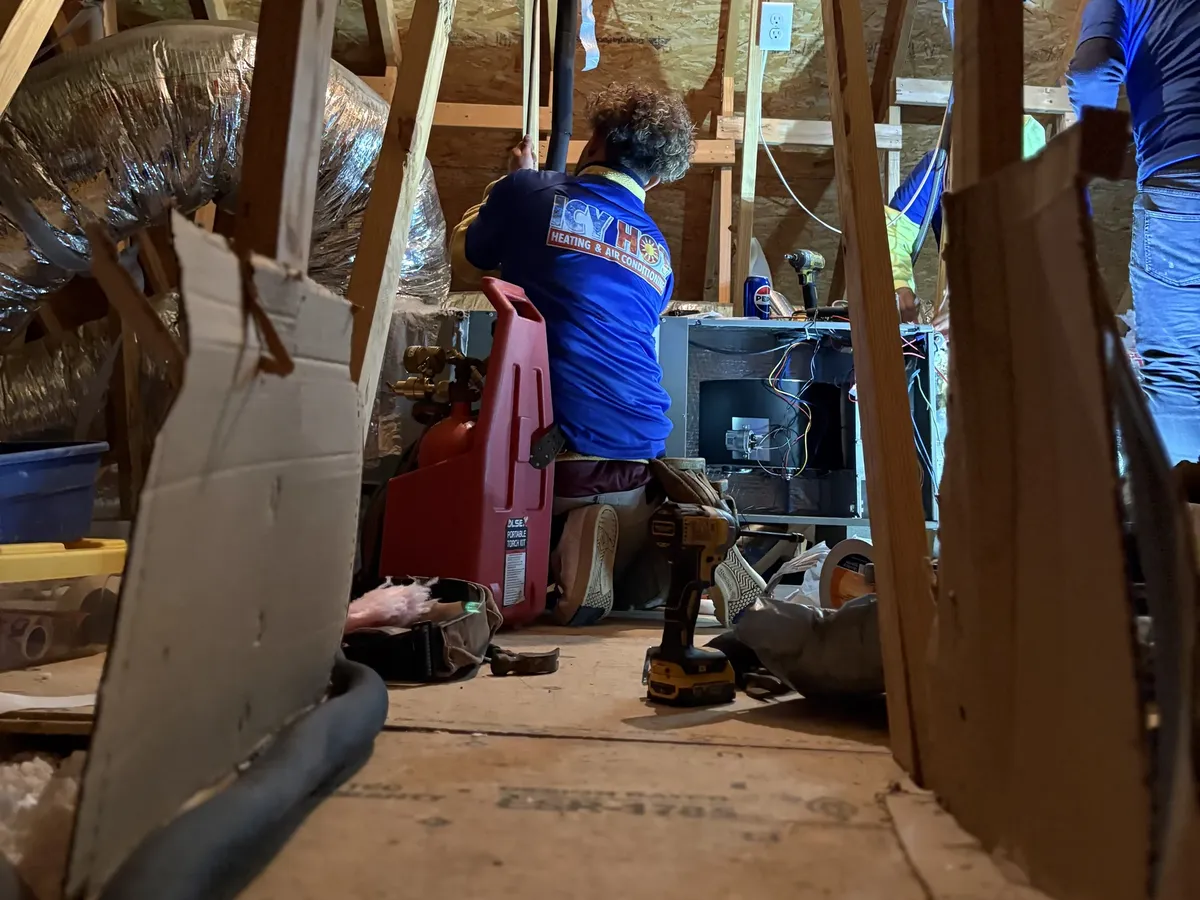
A professional tune-up goes well beyond what’s safe or practical for a homeowner. ENERGY STAR’s maintenance checklist recommends annual professional service for every central air conditioning system. Here’s what a qualified technician covers during a standard 20-point inspection:
Electrical system: Testing capacitors, inspecting contactors for pitting or arcing, tightening all electrical connections, and measuring voltage and amperage on motors. In my experience, a weak capacitor is the single most common finding during spring tune-ups. It’s a $150 fix in March and a $400 emergency call in July.
Refrigerant: Checking charge levels, inspecting lines for leaks, and verifying operating pressures. Refrigerant handling requires EPA Section 608 certification (our technicians hold the Universal level, covering all refrigerant types). This is not a DIY job. If your system was installed after January 2025, it uses R-454B refrigerant instead of R-410A, which requires technicians trained on the new A2L safety protocols.
Coils and airflow: Cleaning the evaporator and condenser coils, checking the blower wheel balance, measuring static pressure, and verifying airflow across the system. Severely fouled coils can increase compressor energy consumption by 30% or more (DOE).
Safety controls: Testing the high-pressure switch, low-pressure cutoff, and thermal overload protections. These safeties prevent compressor damage, refrigerant leaks, and electrical fires.
Overall assessment: Measuring supply and return air temperatures (the “delta T” should be 15–20°F), documenting system age and condition, and flagging parts likely to fail before the season ends.
How Much Does a Spring AC Tune-Up Cost in Raleigh?
A one-time AC tune-up in the Raleigh area costs $100–$250, with the national average around $175 (HomeAdvisor, 2026). Annual maintenance plans that cover both heating and cooling inspections run $150–$500 per year (Angi, 2026), and often include priority scheduling and repair discounts.
Is it worth it? Consider the return. ENERGY STAR-certified AC systems in the Southeast save $1,853 in lifetime energy costs compared to standard-efficiency units, and the best available models save up to $6,724 (DOE FEMP). Maintenance is how you actually capture those savings instead of watching efficiency degrade year after year. A system rated at 16 SEER2 that hasn’t been serviced in three years isn’t performing at 16 SEER2.
If you’re comparing options, our Comfort Club membership includes two annual tune-ups (AC + heating), priority emergency service, and 15% off repairs. It’s the most cost-effective way to keep your system running at rated efficiency.
What Happens If You Skip Your Spring AC Tune-Up?
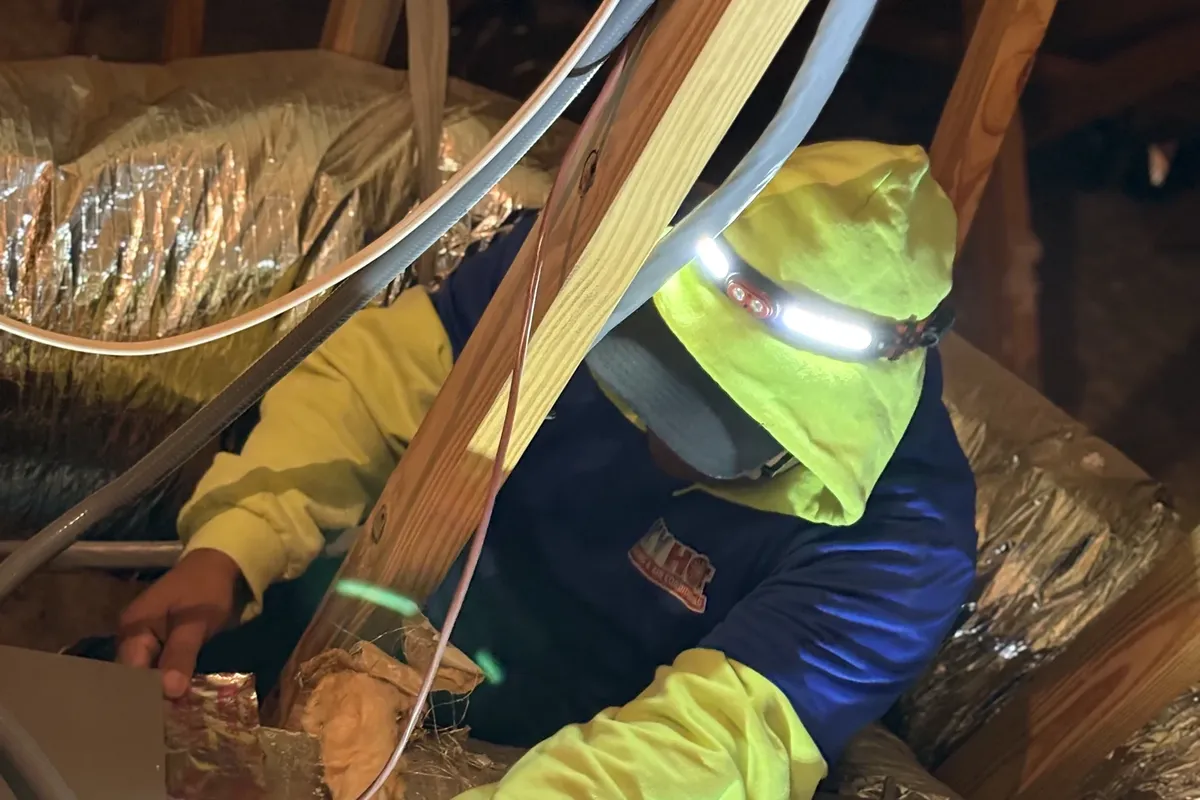
Skipping maintenance doesn’t break your AC immediately. It erodes performance gradually until something fails at the worst possible time. I’ve personally diagnosed hundreds of mid-summer breakdowns that a spring tune-up would have caught. Here’s what the data shows:
Shorter lifespan. Properly maintained air conditioners last 15–20 years (Lennox), but neglected systems often fail within 10–12 years. In Raleigh, where systems log roughly 2,239 cooling degree days per year (NOAA), that workload takes a real toll on unmaintained equipment.
Higher bills. Unmaintained systems can use up to 25% more energy than properly serviced units, driven largely by dirty coils and clogged filters (DOE). On an average Raleigh cooling bill, that’s an extra $200–$400 per summer that you’re paying for nothing.
Voided warranty. Most manufacturer warranties require proof of annual professional maintenance. Skip a year, and a $3,000 compressor replacement that should have been covered becomes your responsibility.
Worse indoor air quality. Dirty coils, clogged filters, and standing water in drain pans create breeding grounds for mold, bacteria, and allergens that circulate through your home every time the system runs.
Spring AC Tune-Up Checklist: The Complete Summary
Here’s everything in one place. Print this, stick it on your fridge, and check off each item before Raleigh’s first heat wave.
| Task | DIY | Pro | Why It Matters |
|---|---|---|---|
| Replace air filter | ✓ | Cuts energy use 5–15% | |
| Clear outdoor unit debris | ✓ | Restores condenser airflow | |
| Test thermostat | ✓ | Catches mode/schedule issues early | |
| Flush condensate drain | ✓ | Prevents water damage | |
| Open and clean vents | ✓ | Eliminates pressure imbalances | |
| Listen for unusual sounds | ✓ | Catches problems before failure | |
| Test capacitors and contactors | ✓ | Prevents compressor failure | |
| Check refrigerant levels | ✓ | Requires EPA 608 certification | |
| Clean evaporator and condenser coils | ✓ | Fouled coils increase energy use 30%+ | |
| Measure airflow and delta T | ✓ | Verifies system performance | |
| Inspect electrical connections | ✓ | Prevents fire and equipment damage | |
| Test safety controls | ✓ | Protects against catastrophic failure |
Frequently Asked Questions
Schedule Your Spring AC Tune-Up Before the Rush
Raleigh’s hot season starts May 26. By then, every HVAC company in the Triangle is fielding emergency calls from homeowners who wished they’d scheduled sooner. Don’t be one of them.
Call (919) 673-7667 or schedule online to book your spring tune-up while appointments are still available. I’ve been keeping Raleigh homes comfortable since 2008, and every tune-up comes with upfront pricing and no surprise fees. My team and I will make sure your system is ready before the heat arrives.
— Frankie Asfari, Owner & NATE-Certified Technician, Icy Hot Heating & Air Conditioning