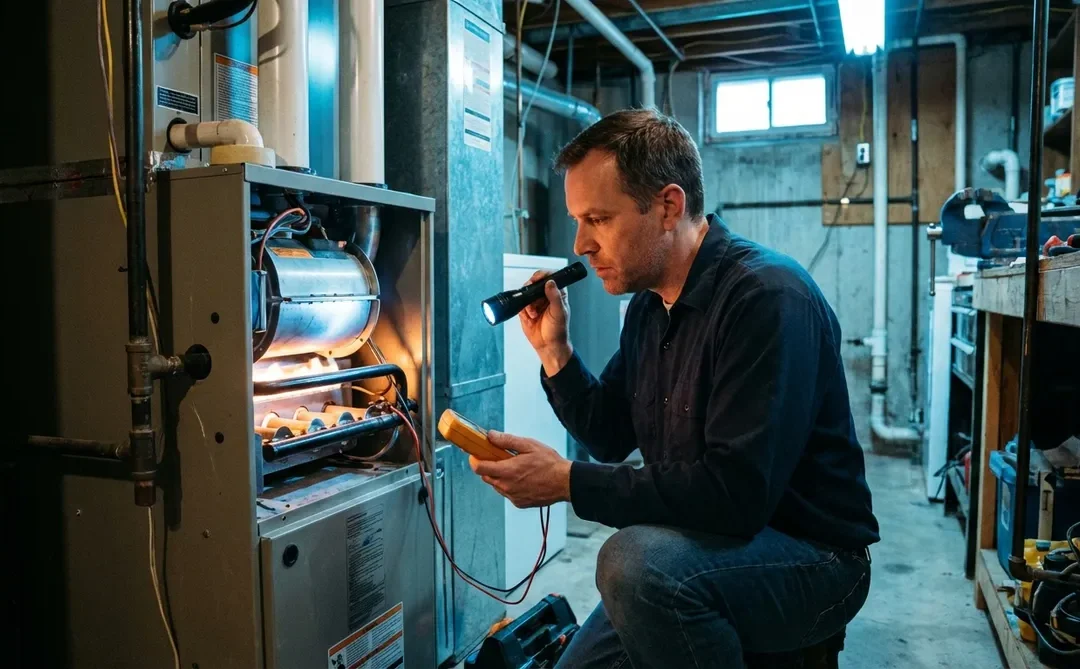
It’s a cold Raleigh morning, you wake up to a chilly house, and your furnace isn’t heating. Before you panic, know this: many furnace problems have identifiable causes, and some you can fix yourself. But certain situations demand immediate professional attention, and knowing the difference could protect your family’s safety.
This guide breaks down the most common furnace failures, what you can safely check on your own, and when it’s time to call a Raleigh furnace repair technician.
TL;DR: A furnace that won’t heat is often caused by a thermostat issue, dirty filter, or failed igniter, all fixable. But gas smells, CO detector alarms, or repeated shutdowns need immediate professional attention. Preventive maintenance reduces HVAC breakdowns by 31–50% (Second Nature/National Rental Home Council, 2024).
Common Reasons Your Furnace Isn’t Heating
Most no-heat calls come down to a handful of fixable issues. According to the U.S. Department of Energy, simply replacing a dirty filter can reduce your HVAC system’s energy use by 5–15%, and a clogged filter is the single most common reason furnaces shut down unexpectedly. Here’s what to check first.
Thermostat Issues
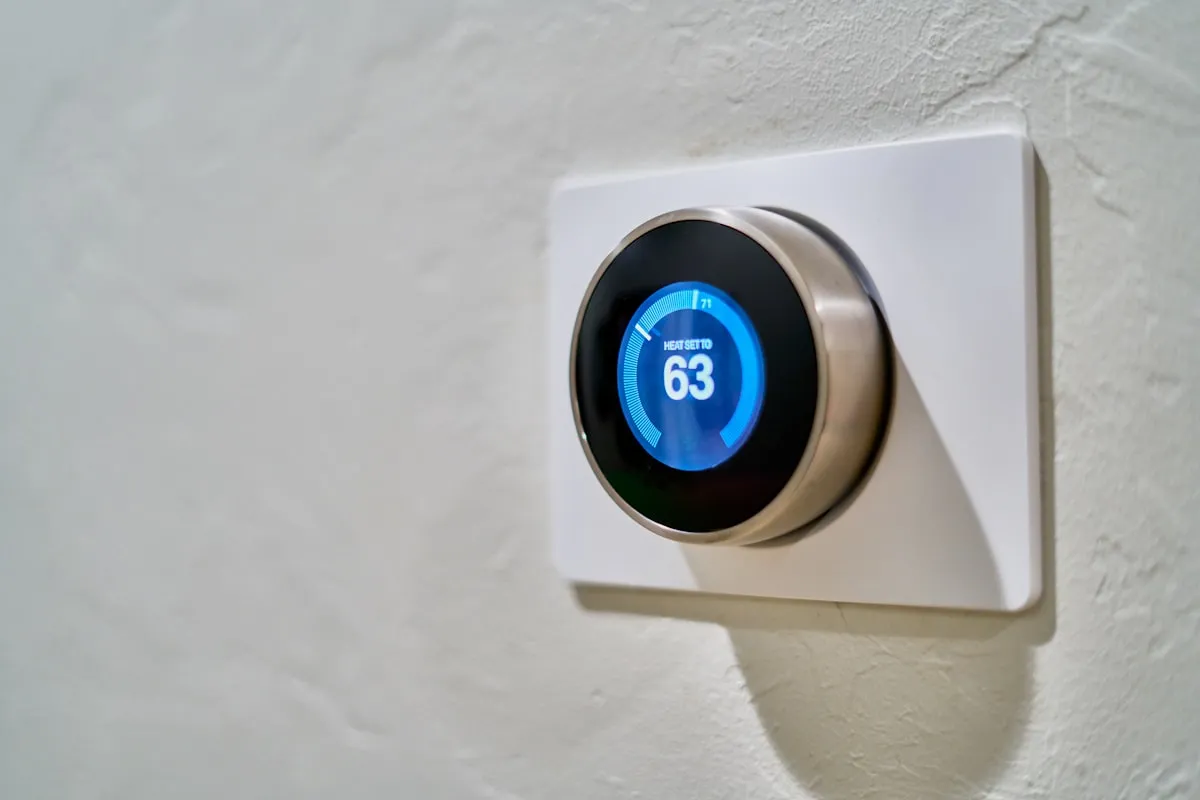
The thermostat is the most overlooked component when a furnace stops heating. Before assuming the worst:
- Verify it’s set to “Heat” mode (not “Cool” or “Off”)
- Check that the set temperature is at least 3–5°F above the current room temperature
- Replace batteries if the display is dim or blank
- Ensure the thermostat is level and securely mounted (a crooked thermostat with a mercury switch won’t work correctly)
- Check for a tripped breaker on the thermostat circuit
Thermostat issues are among the most common causes of no-heat service calls, and many can be resolved by the homeowner in minutes.
Dirty or Clogged Air Filter
This is the number one preventable cause of furnace problems. A severely clogged filter restricts airflow so much that:
- The heat exchanger overheats and triggers the high-limit safety switch, shutting the furnace down
- The blower motor strains, potentially burning out
- The system short-cycles (turns on and off repeatedly without completing a heating cycle)
Pull your filter out and hold it up to a light. Can’t see through it? Replace it immediately. During heavy use (December through February in Raleigh), check the filter every 30 days.
Pilot Light or Ignition Problems
Older furnaces (pre-2000) with standing pilot lights: The pilot may have blown out. Follow your furnace’s relighting instructions (printed on the unit). If the pilot won’t stay lit, the thermocouple is likely faulty, a common and inexpensive repair.
Newer furnaces with electronic ignition: Modern systems use either hot surface igniters (HSI) or intermittent pilot systems. A failed igniter prevents the gas from lighting. You may hear the furnace click on, the draft inducer motor run, but no flame ignites. Igniter replacement is a common furnace repair in Raleigh. If your system runs on natural gas, you might also want to learn about gas furnace specifics.
Blower Motor or Fan Problems
The blower motor pushes heated air through your ductwork. Signs of blower failure include:
- Furnace cycles and you can feel heat at the unit, but air barely comes from the vents
- Humming or buzzing sounds from the air handler without fan movement
- A squealing noise (bearing failure on belt-driven motors)
- Burning smell (overheating motor)
Check that the blower access panel is securely closed, most furnaces have a safety switch that prevents operation when the panel is removed.
Flame Sensor Issues
The flame sensor is a safety device that verifies the gas has ignited. Over time, it develops a carbon buildup that prevents it from detecting the flame. The furnace lights momentarily, then shuts off within 3–5 seconds. This is one of the most common furnace repairs, a technician can clean or replace the sensor in minutes.
Ductwork Problems
Sometimes the furnace works fine, but the heat never reaches the rooms. Why? Causes include:
- Disconnected duct runs in the attic or crawlspace
- Closed or blocked supply registers
- Collapsed flex duct
- Dampers in the wrong position
Walk through your home and check all supply registers, make sure they’re open and unobstructed by furniture, rugs, or curtains. If you suspect duct leaks, professional duct sealing is one of the highest-ROI improvements you can make.
DIY Safety Checks Before Calling for Service
A study tracking 7, 772 rental units found that preventive maintenance programs reduced HVAC service requests by 31–50%. Many no-heat situations fall into the “easy fix” category. Run through these checks before picking up the phone, you might save yourself a service call.
- Thermostat settings: Confirm Heat mode, proper temperature setting, fresh batteries.
- Air filter: Check and replace if dirty. Wait 10 minutes and try the system again.
- Power supply: Check the furnace power switch (located on or near the unit), the circuit breaker, and verify the gas valve is in the “On” position.
- Examine the flame (gas furnaces): If you can see the burner area through a sight glass, look for a steady blue flame. A yellow or flickering flame indicates a combustion problem, call a professional.
- Listen for sounds: Note what happens when the thermostat calls for heat. Does the draft inducer motor start? Do you hear clicking? Does the blower eventually run? These details help your technician diagnose the issue faster.
When to Call a Professional Immediately
Furnace problems aren’t always just an inconvenience, some are genuine emergencies. According to the U.S. Consumer Product Safety Commission (CPSC), an estimated 69 carbon monoxide deaths per year are associated with heating systems, that’s 28% of all consumer product CO fatalities. Don’t take chances with these situations.
Emergency Situations, Act Immediately
- Gas smell: If you smell rotten eggs or sulfur near your furnace, do not flip any switches or use any electronics. Open windows, evacuate the house, and call your gas company (Dominion Energy: 1-877-776-2427) or 911 from outside.
- Carbon monoxide detector alarm: Evacuate immediately. CO is odorless and deadly. Call 911 from outside the home. Do not re-enter until cleared by emergency services.
- Smoke or visible fire: Evacuate, call 911. Do not attempt to diagnose or repair.
- Complete heating loss in freezing weather: When temperatures drop below freezing and you have vulnerable family members (infants, elderly, immunocompromised), treat this as an emergency. Pipes can freeze and burst within hours. Call for emergency heating repair.
Non-Emergency But Urgent: Schedule Prompt Service
Some furnace problems won’t put you in immediate danger but can get expensive if ignored. Heat exchanger replacement, for example, averages $1, 750 nationally, with most homeowners paying between $1, 250 and $3, 000 (HomeAdvisor, 2025). Catching problems early keeps repair costs closer to the low end. Address these within 24–48 hours.
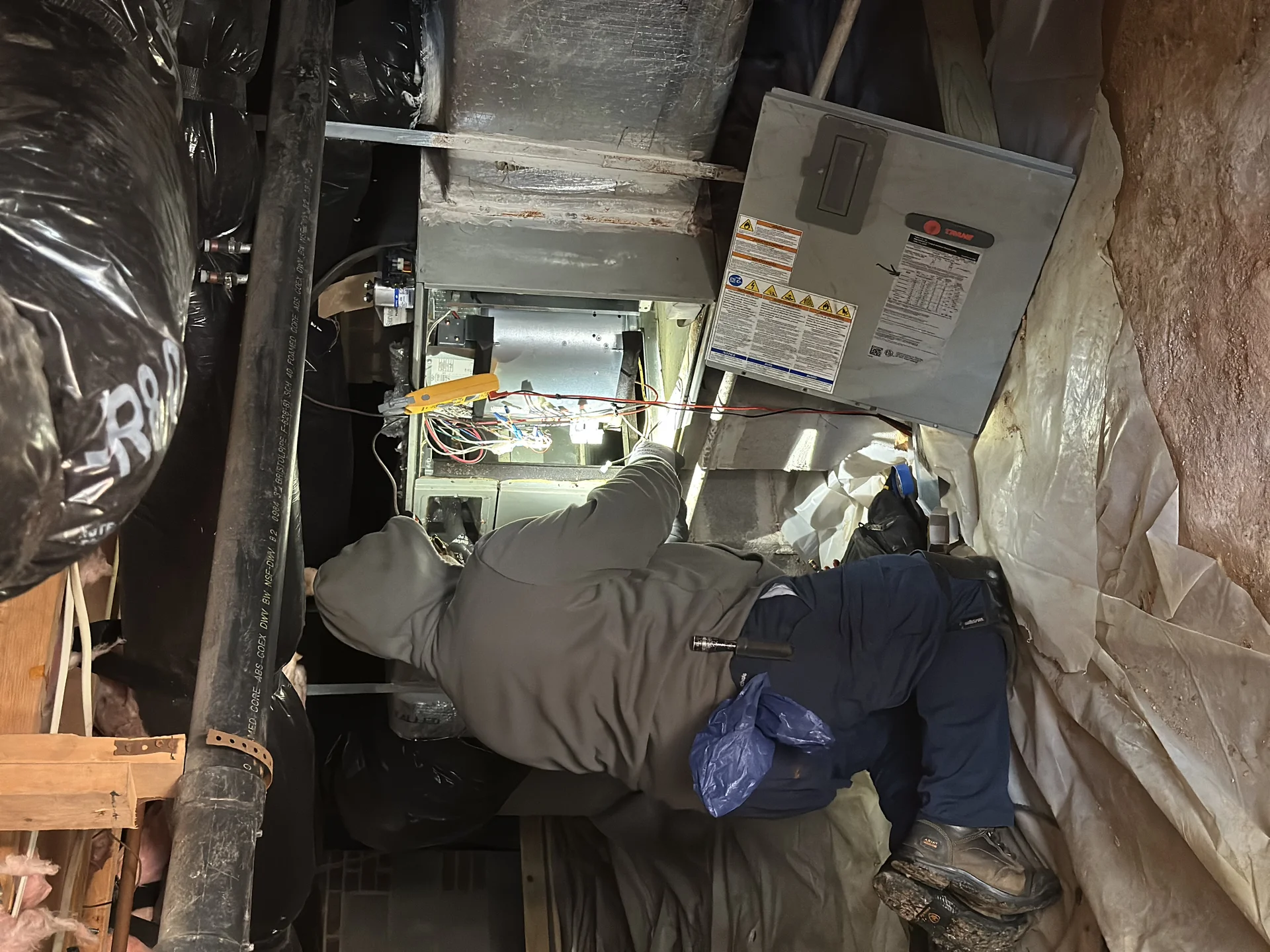
Short Cycling
The furnace turns on, runs for 2–5 minutes, shuts off, and repeats. Causes include a dirty flame sensor, malfunctioning thermostat, oversized furnace, or overheating from restricted airflow. Short cycling damages the heat exchanger over time, one of the most expensive furnace components to replace.
No Heat After DIY Troubleshooting
If you’ve checked the thermostat, filter, power supply, and the furnace still won’t heat, the problem requires diagnostic equipment and expertise. Common professional-only causes include failed control boards, cracked heat exchangers, faulty gas valves, and wiring issues.
Unusual Smells (Not Gas)
A burning dust smell when the furnace first starts for the season is normal, it burns off within an hour. But what about persistent burning smells? Acrid odors or chemical smells indicate component failure and need professional inspection.
Rising Heating Bills Without Usage Change
A sudden spike in your gas or electric bill without a corresponding change in usage patterns usually means your furnace is losing efficiency. Causes range from dirty burners and degraded heat exchangers to failing blower motors running at full capacity continuously.
Inconsistent Heating (Hot and Cold Spots)
If some rooms are warm while others are cold, the issue may be ductwork-related rather than furnace-related. However, a failing blower motor can also cause inadequate air distribution. A technician can measure airflow at each register to identify the root cause.
When Repairs Exceed 50% of Replacement Cost
For the full version of that calculation, including what the manufacturers actually publish on furnace lifespan and the seven other warning signs worth watching, see our guide to the signs your furnace needs replacing.
Gas furnaces have a median service life of 18 years, according to ASHRAE guidelines, with a typical range of 15–20 years (NAHB). The DOE notes that upgrading from an old furnace to a high-efficiency model can cut your fuel bills in half. At some point, sinking money into an aging system stops making financial sense.
Consider furnace replacement when:
- The furnace is 15+ years old and needs a major repair (blower motor, heat exchanger, control board)
- The repair cost exceeds 50% of a new furnace installation, a widely used industry guideline
- You’ve had 3 or more repairs in the past 2 years
- Your furnace has an AFUE rating below 80% (check the yellow EnergyGuide label or nameplate)
- The heat exchanger is cracked, this almost always justifies replacement due to both safety concerns and cost (averaging $1, 750 per HomeAdvisor)
Preventing Future Furnace Problems
The NFPA reports that heating equipment causes an average of 44, 210 home fires per year, with 46% occurring during December through February. Most of these are preventable. Here’s how to keep your furnace safe and reliable.
Annual Professional Maintenance
Schedule a furnace tune-up every fall before the heating season. A professional inspection catches worn components, dirty burners, cracked heat exchangers, and electrical issues before they cause a breakdown. We’ve found that homes on a regular maintenance plan rarely experience mid-winter failures.
Filter Schedule
Mark your calendar to check the filter on the 1st of every month during heating season. Keep 2–3 spare filters in the house so you’re never caught without one.
Clear Area Around the Furnace
Maintain at least 3 feet of clearance around the furnace on all sides. Don’t store boxes, chemicals, paint, or flammable materials near the unit. This is both a safety requirement and ensures proper air intake for combustion.
Carbon Monoxide Detectors
Install CO detectors on every level of your home and within 15 feet of all sleeping areas. Test them monthly and replace batteries annually. CO detectors are your last line of defense against a cracked heat exchanger, a problem that can develop without any visible symptoms.
Thermostat Upgrade
A programmable or smart thermostat prevents the furnace from running excessively. The DOE states that turning your thermostat back 7–10°F for 8 hours a day can save as much as 10% annually on heating and cooling.
Know Your System
Keep a record of your furnace’s make, model, age, and service history. This information helps technicians diagnose problems faster and helps you make informed repair-vs-replace decisions. The model and serial number are on a label inside the blower compartment door.
Frequently Asked Questions About Furnace Problems
Get Help Now
If your furnace isn’t heating and you’ve exhausted the DIY checks in this guide, our NATE-certified technicians serve Raleigh, Durham, Cary, Apex, and the entire Triangle area with fast, reliable furnace repair.
Call (919) 673-7667 for same-day service or 24/7 emergency repair when you need heat fast.