Heat Pump Repair in Raleigh, NC
Specialized heat pump diagnostics & same-day repair
Common Heat Pump Problems in the Triangle
Most heat pump trouble in the Triangle falls into a handful of patterns, and a good number of those calls turn out to be normal behavior, not a breakdown. Our mild North Carolina winters make heat pumps a great fit here, so the unit runs year-round and shows its quirks more than it would up north. Here are the issues we see most.
- Supply air feels cool in heating mode. This is the number one call we get, and most of the time it is normal. A heat pump puts out warm air around 95–100°F, which is gentler than the hot blast off a gas furnace. It still hits your setpoint. It is only a real problem when the air is cold, the house never warms up, or the backup heat is running constantly.
- The unit ices over or gets stuck in defrost. A light coat of frost in cold weather is normal, and the system runs a defrost cycle to clear it. A thick block of ice, or a unit that defrosts over and over without catching up, points to a sensor, low refrigerant, or airflow problem worth a look.
- Auxiliary or emergency heat runs too much. Backup heat strips kick in on the coldest mornings, and that is by design. If your aux heat light is on all day in mild weather, though, the heat pump is not pulling its weight, and your power bill will show it.
- Not heating or not cooling at all. When the system blows but never changes the temperature, the usual suspects are a failed capacitor, a bad reversing valve, low refrigerant, or a thermostat issue.
- Short cycling. A unit that switches on and off every few minutes is straining itself. Causes range from a clogged filter to a refrigerant charge problem to an oversized system.
- Odd noises. Grinding, screeching, or loud buzzing usually means a motor, fan, or electrical part that needs attention before it fails completely.
Not sure which bucket your problem falls into? Our guide to the signs you need heat pump repair walks through the warning signs in plain terms, and a quick call to (919) 673-7667 sorts out the rest.
How Much Does Heat Pump Repair Cost in Raleigh?
Most heat pump repairs in Raleigh run $150–$700, depending on which part failed. Common fixes like a capacitor, contactor, sensor, or thermostat sit at the lower end of that range. Bigger jobs, like compressor or reversing-valve work, cost more because the part is expensive and the labor is involved. We quote your exact price before any work starts.
The honest truth is that the part is what drives the bill. A worn capacitor is a quick, affordable fix. A failed compressor is the most expensive repair on a heat pump, and when one goes on an older unit, replacement is often the smarter spend. We will tell you that straight, not steer you toward the costliest option.
Every diagnosis comes with upfront, flat-rate pricing, always, with no upsell. You hear the number before we pick up a tool, so there are no surprises on the invoice and no pressure to add things you do not need. If the fix is simple, we say so. If it is not worth doing, we say that too. These are general ranges, not a quote: the only way to know your real number is a diagnostic, and you can book one at (919) 673-7667.
When to Repair vs. Replace a Heat Pump
A heat pump runs year-round for both heating and cooling, so it works harder than a system that only handles one season. That is why heat pumps average about 10–15 years in our area, a bit shorter than a furnace or a cooling-only AC. Knowing where your unit sits in that window is the first step in deciding whether to fix it or replace it.
We weigh three things with you, honestly. First is age: a unit past the 10-year mark with a major failure is usually a replacement conversation, while a younger system almost always deserves the repair. Second is the cost of the fix against the value of the unit: spending $1,500 on a 13-year-old heat pump rarely makes sense, but a $300 repair on a 6-year-old one is easy math. Third is how the rest of the system is doing, because a tired unit that limps from one breakdown to the next is telling you something.
There is no one-size answer, and we do not push new equipment to pad a ticket. Sometimes the right call is a simple repair that buys you years. Other times, a replacement pays for itself in lower bills and fewer service calls. If you are also weighing your options for an entirely different setup, our comparison of a heat pump vs. central air lays out the trade-offs. When you want a straight answer for your home, call (919) 673-7667 and we will look at it with you.
Heat Pump Repair in the Triangle
Heat pump not heating? Not cooling? Running constantly without reaching the set temperature? Because heat pumps handle both heating and cooling, a problem with yours means losing comfort in any season, and the longer you wait, the more strain it puts on the system.
Heat pumps require specialized diagnostics that go beyond standard HVAC repair. Icy Hot’s NATE-certified technicians are trained in heat pump refrigerant management, reversing valve diagnosis, and defrost cycle troubleshooting. We pinpoint the problem, explain your options, and provide upfront pricing before starting any work.
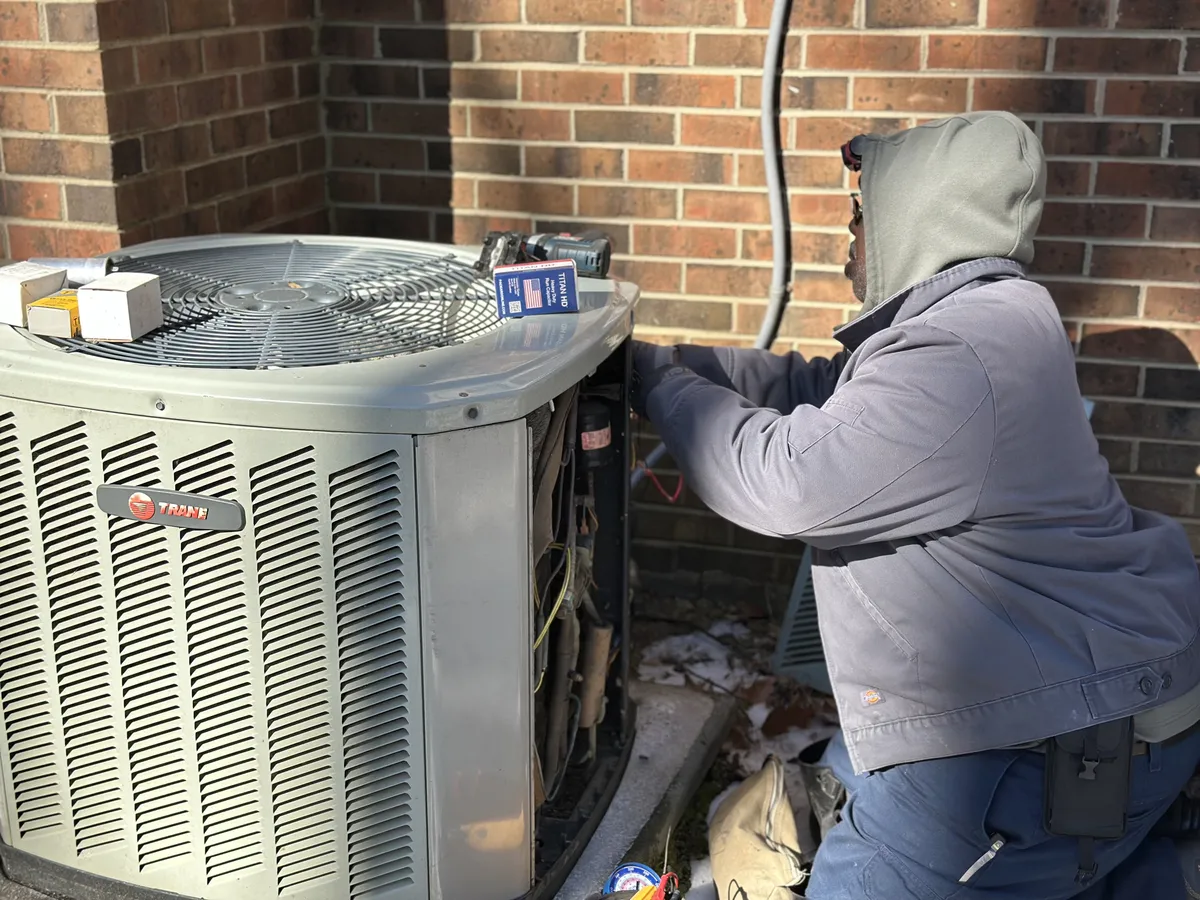 Trane heat pump condenser unit beside a brick home" loading="lazy" width="1200" height="900" />
Signs You Need This Service
- Insufficient heating or cooling
- Ice on outdoor unit
- System running constantly
- Short cycling
- Unusual noises
- High energy bills
Our Heat Pump Repair Process
Heat pumps are complex systems that heat and cool. Here is how we diagnose and repair them:
- Call and Describe the Issue: Tell us what is happening, not heating, not cooling, running constantly, ice buildup on the outdoor unit, unusual noises, or high energy bills. Heat pump symptoms differ from traditional AC or furnace problems, so these details matter.
- Comprehensive Diagnostic: We check both heating and cooling modes, test the reversing valve, measure refrigerant charge, inspect the defrost control and timer, check auxiliary heat operation, test electrical components, and verify thermostat communication.
- Upfront Quote: We explain the diagnosis clearly, whether it is a failed reversing valve, refrigerant leak, defrost board issue, or compressor problem, and provide a written estimate before starting any work.
- Expert Repair: Our NATE-certified technicians handle the repair using manufacturer-approved parts. Heat pump repairs require specialized knowledge of the refrigerant cycle, reversing valve, and dual-mode operation that general HVAC technicians may not have.
- Dual-Mode Verification: We test both heating and cooling modes after the repair, verify the defrost cycle activates properly, check auxiliary heat staging, and confirm the system transitions smoothly between modes.
Why Choose Icy Hot?
Your comfort and peace of mind are what drive everything we do. Here is what that means for you:
- Diagnosed Right the First Time: Our NATE-certified technicians hold the industry’s top credential, so you are not paying for guesswork or repeat visits
- No Surprise Bills: You see and approve every cost before we start. If the price changes, we stop and talk to you first
- Premium Equipment, Fair Prices: As an Authorized Lennox Dealer, we offer top-rated systems that lower your energy bills and last longer
- Help When You Need It Most: Day or night, a real person answers your call. No voicemail, no waiting until Monday
- Your Home Is Protected: Fully licensed (NC #L.34356) and insured, so your property and investment are covered on every job
Brands We Service
As an Authorized Lennox Dealer, we specialize in Lennox systems. We also expertly service and install all major brands including Carrier, Trane, Rheem, Goodman, York, Amana, Daikin, Bryant, Coleman, Ruud, American Standard, Heil, and Airtemp.
Frequently Asked Questions
How much does heat pump repair cost in Raleigh?
Why is my heat pump blowing cold air in heat mode?
Is it normal for ice to form on my heat pump's outdoor unit?
What does it mean when my heat pump makes strange noises?
How often does a heat pump need refrigerant?
Should I repair or replace my heat pump?
Why does my heat pump short cycle on and off repeatedly?
Serving Raleigh & the Greater Triangle
We bring this service to homeowners across the Triangle, including Cary · Apex · Durham · Garner · Holly Springs · Fuquay-Varina · Wake Forest · Morrisville · Knightdale · Clayton · Willow Springs.