An NREL field study of 4,168 residential AC units found that 72% had improper refrigerant charge and 67% had airflow below the recommended minimum (NREL, 2013). That means the majority of AC systems are already running with problems — most homeowners just don’t know it yet.
In Raleigh, where July highs average 91°F and morning humidity hits 89% (NOAA, 1991–2020 normals), your AC works harder than almost anywhere else in the country. When something goes wrong, you’ll feel it fast. Before calling for AC repair, there are diagnostic steps you can take yourself — and in some cases, fix the problem without a service call.
Here are the five most common AC problems we see in Raleigh homes, what causes each one, and exactly how to diagnose them.
TL;DR: The five most common AC problems — unit won’t start, blowing warm air, water leaks, strange noises, and foul odors — account for the vast majority of residential service calls. Most cost between $100 and $700 to repair (Fixr, 2025), but simple fixes like replacing a dirty filter or resetting a tripped breaker can solve the problem for free.
Why Won’t Your AC Turn On?
According to ENERGY STAR, “dirt and neglect are the top causes of heating and cooling system failure” (ENERGY STAR). An AC that won’t start is alarming, but the cause is often something simple — a tripped breaker, dead thermostat batteries, or a switched-off power disconnect.
In our experience servicing Raleigh homes since 2008, about half the “won’t turn on” calls we get are resolved by checking three things the homeowner could have caught first. Here’s what to look at:
Diagnosis Steps
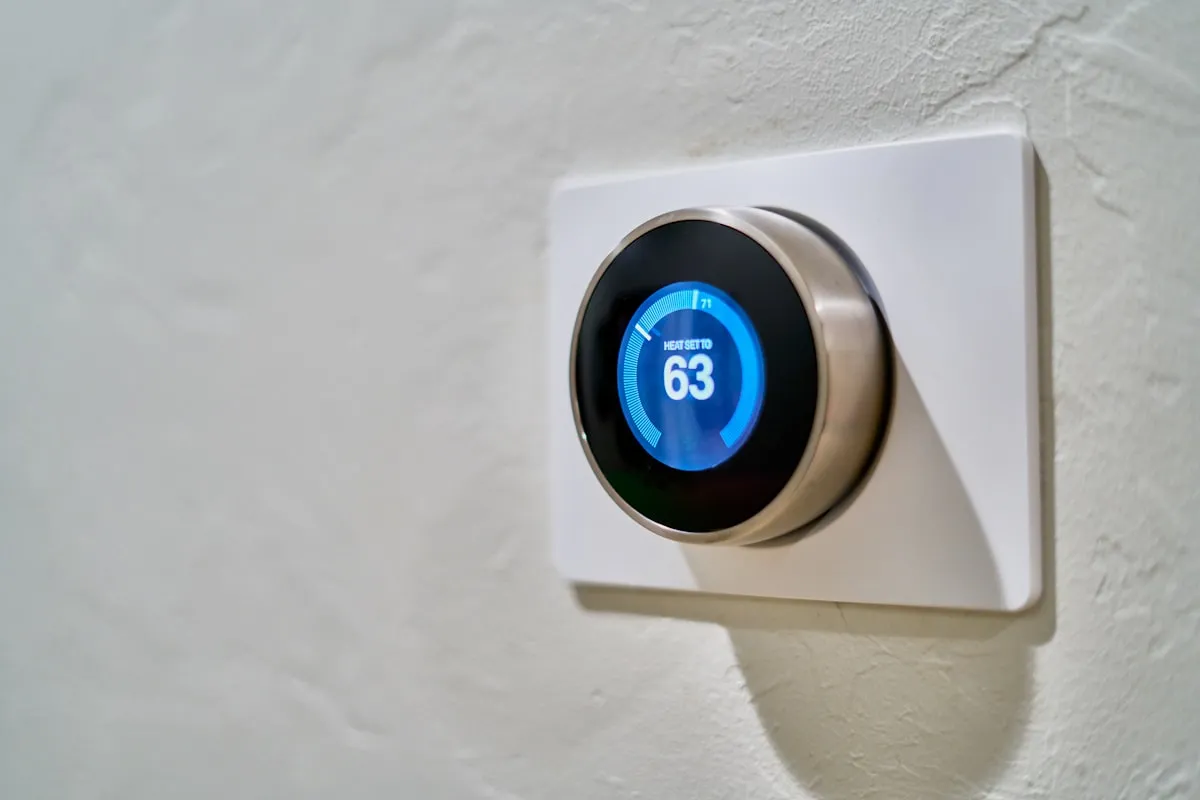
- Check the thermostat: Make sure it’s set to “Cool” mode and the temperature is set at least 3–5 degrees below the current room temperature. If the display is blank, replace the batteries (for battery-powered models) or check the dedicated thermostat circuit breaker.
- Check the circuit breaker: Go to your electrical panel and look for the breaker labeled “AC,” “Air Handler,” or “Condenser.” Most systems have two breakers — one for the indoor unit and one for the outdoor unit. If either is tripped, flip it fully to “Off” and then back to “On.” If it trips again immediately, do not reset it again — this indicates an electrical fault that requires professional diagnosis.
- Check the power switch: Most indoor air handlers have a wall-mounted power switch that looks like a regular light switch, often located on or near the unit. Verify it’s in the “On” position. We’ve found this switch gets accidentally flipped during other work more often than you’d think.
- Check the outdoor disconnect: Near your outdoor condenser unit, there’s a disconnect box. Open it and verify the pull-out is properly seated and the fuses (if present) are intact.
When to Call a Pro
If you’ve verified all power sources and the system still won’t start, the problem is likely a failed capacitor ($100–$400), contactor ($150–$450), or control board ($100–$700) — all of which require professional AC repair service (Fixr, 2025).
Why Is Your AC Blowing Warm Air?
The U.S. Department of Energy confirms that a dirty, clogged filter can reduce your AC’s energy consumption by 5% to 15% — and in severe cases, restrict airflow enough that the evaporator coil freezes over entirely (DOE). When that happens, your system runs but the air from your vents is barely cooler than room temperature.
This is the single most common problem we diagnose in Raleigh’s summer heat. Is your filter older than 60 days? Start there.
Diagnosis Steps
- Check the air filter: A severely clogged filter restricts airflow across the evaporator coil. The DOE recommends cleaning or replacing AC filters every one to two months during cooling season (DOE). Replace the filter and give the system 30 minutes to recover. Not sure when you last changed yours? That’s your answer.
- Verify the outdoor unit is running: Go outside and confirm the condenser fan is spinning and the compressor is humming. If the fan runs but the compressor doesn’t, you likely have a compressor or capacitor issue.
- Check for ice on the indoor coil: Remove the access panel on your air handler (after turning the system off). If the evaporator coil is covered in ice, you have either a refrigerant leak or severe airflow restriction. Turn the system to “Fan Only” for 2–3 hours to let the ice melt, then call a technician.
- Check thermostat fan setting: If the fan is set to “On” instead of “Auto,” the blower runs continuously — even when the compressor isn’t cooling. This makes it feel like warm air. Switch to “Auto.”
When to Call a Pro
If the filter is clean, both units are running, and the air is still warm, you likely have a refrigerant leak or compressor issue. The NREL study found that 72% of residential AC units had improper refrigerant charge (NREL, 2013). Refrigerant leak repair typically costs $200–$1,500 depending on the location and severity (Bob Vila, 2024). Refrigerant handling requires EPA certification — this isn’t a DIY repair.
Why Is Your AC Leaking Water Inside?
Water pooling around your indoor air handler is one of the most common AC problems in Raleigh, and our humidity is directly to blame. With August morning humidity reaching 92% at 7 AM (NOAA data), your evaporator coil produces heavy condensation — sometimes more than the drainage system can handle.
The EPA recommends keeping indoor humidity below 60%, ideally between 30% and 50% (EPA). When your AC can’t drain properly, indoor humidity spikes, and mold risk climbs with it.
Diagnosis Steps
- Check the condensate drain line: This is the most common cause. The PVC drain line carries condensation water from the indoor coil to a floor drain or outside. Over time, algae, mold, and debris clog the line. You can clear it by:
- Locating the drain line access port (T-shaped fitting near the indoor unit)
- Pouring 1 cup of white vinegar or 1/2 cup of bleach through the line
- Using a wet/dry vacuum on the outdoor end of the drain line to suction out the clog
Condensate drain repair typically costs just $100–$195 when a professional handles it (Trane, 2025).
- Check the drain pan: Directly under the evaporator coil sits a drain pan. If the pan is cracked, rusted through, or misaligned, water overflows onto the floor. Inspect the pan with a flashlight.
- Check for a frozen evaporator coil: A frozen coil produces excess water when it melts — more than the drain pan and line can handle. Causes include dirty filters, low refrigerant, or blower motor problems.
When to Call a Pro
If you can’t clear the drain line yourself, if the drain pan needs replacement, or if the coil is freezing, a technician needs to diagnose the root cause. Ignoring water leaks can lead to mold growth — research shows mold exposure increases respiratory problems by 30–50% (Fisk et al., 2007, via NIH). Don’t wait on this one.
Strange Noises: Banging, Buzzing, or Screeching
The average AC repair runs $250–$700 nationally (Fixr, 2025), but ignoring unusual noises can turn a $300 fix into a $1,800 compressor replacement (HomeAdvisor, 2025). A healthy AC system is relatively quiet. New or unusual noises almost always indicate a mechanical problem that will get worse without attention.
Noise Guide
- Banging or clanking (indoor unit): Likely a loose or broken blower fan blade, a disconnected motor mount, or debris inside the air handler. Turn the system off immediately to prevent further damage.
- Banging (outdoor unit): Could indicate a loose compressor mount, broken valve, or debris striking the fan blade. Check for visible obstructions — Raleigh’s pine needles and oak pollen are common culprits.
- Buzzing (outdoor unit): Often caused by a failing contactor ($150–$450 to replace), loose wiring, or a dying compressor motor. A constant buzz without the compressor starting usually means the contactor or capacitor has failed.
- Screeching or squealing: Belt-driven blower motors produce this sound when the belt is worn or misaligned. Direct-drive motors screech when bearings fail. Fan motor replacement runs $200–$700 (Trane, 2025). Both require prompt service to avoid motor burnout.
- Clicking at startup: Some clicking when the system starts is normal (relays engaging). Continuous clicking without the system starting suggests a control board or relay problem — circuit board replacement costs $100–$700.
- Hissing: A hissing sound from the refrigerant lines or indoor coil may indicate a refrigerant leak — this requires immediate professional attention.
When to Call a Pro
Any banging, screeching, or hissing noise warrants a professional inspection. Continuing to run the system risks turning a minor repair into a major one. We’ve seen homeowners turn a $250 capacitor replacement into a $2,000 compressor job by running the system for another week.
Foul Odors From Your AC Vents
Research published in the NIH’s PubMed Central found that dampness and mold exposure increases respiratory problems by 30–50%, and an estimated 21% of current U.S. asthma cases are attributable to dampness and mold — costing $3.5 billion annually (Mudarri & Fisk, 2007, via NIH). Unpleasant smells from your AC aren’t just a nuisance — they’re often a health warning.
Odor Guide
- Musty or moldy smell: The most common odor complaint in Raleigh homes. Caused by mold or mildew growth on the evaporator coil, in the drain pan, or inside the ductwork. With the CDC recommending indoor humidity stay below 50% (CDC), Raleigh’s 89–92% outdoor humidity makes proper drainage and indoor air quality critical. Clean the drain line, replace the filter, and consider a professional air quality inspection if the smell persists.
- Burning or electrical smell: Could indicate overheating wiring, a failing motor, or a burned-out component. Turn the system off immediately and call for service. If you smell actual smoke, evacuate and call 911.
- Rotten egg or sulfur smell: While rare with AC systems, this could indicate a natural gas leak if you have a gas furnace sharing the same ductwork. Evacuate immediately and call your gas company.
- Chemical or sweet smell: May indicate a refrigerant leak. Refrigerant has a faintly sweet, chemical odor. This is both an AC performance problem and a potential health concern in enclosed spaces.
- Dead animal smell: Unfortunately common — small animals occasionally enter ductwork and become trapped. The location must be found and the carcass removed, followed by thorough duct cleaning and sealing.
When to Call a Pro
Musty smells that don’t resolve after cleaning, any burning or chemical odors, and persistent unpleasant smells all warrant professional inspection.
How Bad Is the Problem? What the Data Shows
A 2024 HomeServe survey of 2,102 homeowners found that 26% experienced an HVAC repair or replacement emergency in the past 12 months (HomeServe, 2024). That’s more than one in four homeowners dealing with an HVAC emergency every year. In Raleigh’s climate, where we log roughly 1,417 cooling degree days annually, the risk is even higher.
ASHRAE puts the median life expectancy of a residential split-system AC at 15 years (ASHRAE). Regular AC maintenance — filter changes, coil cleaning, refrigerant checks — is the most reliable way to avoid emergency breakdowns and reach that full lifespan.
When Should You Call an AC Professional?
Most AC repairs cost between $250 and $700, with the national average around $375 (Fixr, 2025). Knowing how to diagnose common problems saves you time, money, and discomfort. Many issues have simple solutions you can handle yourself — a clean filter, a reset breaker, a cleared drain line. But when diagnosis points to something beyond your reach, calling a licensed professional protects both your safety and your equipment.
Here’s the quick rule: if the fix involves electricity, refrigerant, or a component you can’t identify, it’s time to call. When repair costs start approaching 50% of what a new system would cost, it may be time to talk about AC replacement instead.
Call (919) 673-7667 anytime — we offer 24/7 emergency AC service for urgent cooling failures across the Triangle.
Frequently Asked Questions